



























The RESET Routine: Recovering After Mistakes in Competitive Pickleball
Motivation Mindset Labs · Doctoral Research · 2026
The RESET Routine: Recovering After Mistakes in Competitive Pickleball
A four-week study examining emotion regulation, mindful attention, and perceived performance after mistakes on the court.
Lauren E. DeLong, PsyD, MBA · University of Arizona Global Campus · IRB 26-076-UAGC
Why Study the Seconds After a Mistake?
Competitive pickleball moves quickly. After an error, players have only moments to manage their response and refocus on the next point. This applied doctoral project explored whether a brief, repeatable post-mistake routine was associated with changes in emotional regulation, mindful attention, and self-reported performance.
The Three-Step RESET Routine
1. RESET
Notice the mistake and touch the paddle-grip band.
2. BREATHE
Inhale for a count of four and exhale for six.
3. REFOCUS
Use a personalized cue and bring attention back to the ball.
Participants received a “BREATHE” band for the paddle grip, a personalized routine card, and a 12-minute instructional video.
Original Research Materials: The Band & Routine Card
These photographs are reproduced from Appendix F of the applied doctoral project and show the actual materials provided to participants during the four-week intervention.
RESET Routine Customization Card

Participants personalized their post-mistake routine using this card.
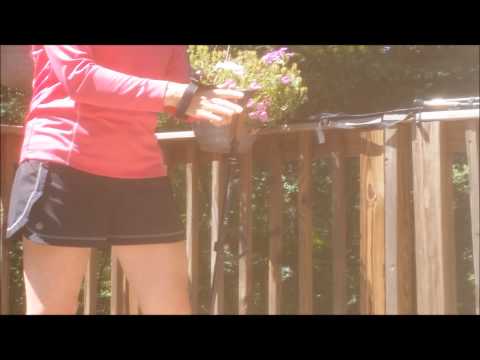
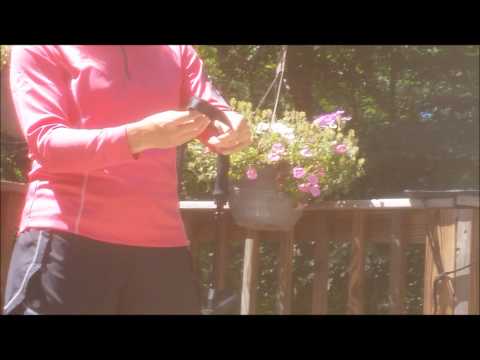
BREATHE Band on Paddle Grip

The tactile cue band reminded players to reset and breathe after an error.
Select either image to view the original at full size.
Research at a Glance
The quantitative study used a single-group pretest–posttest design over four weeks. The matched analytic sample included 59 competitive adult pickleball players reporting skill levels of at least 3.5.
Perceived Performance
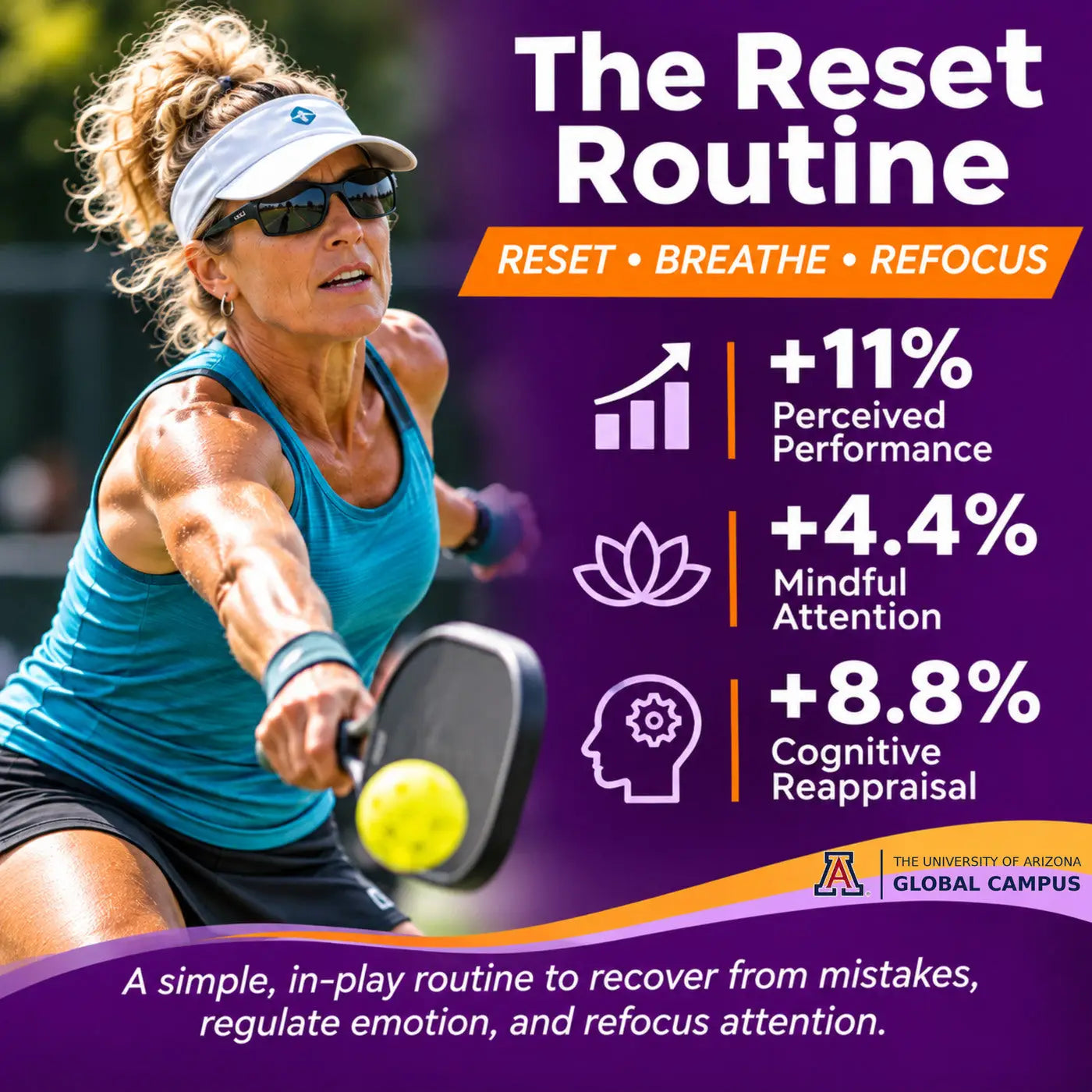
6.83 → 7.58
p < .001 · dz = 0.55
Mindful Attention
3.88 → 4.05
p = .008 · dz = 0.36
Cognitive Reappraisal
5.14 → 5.59
p < .001 · dz = 0.58
Expressive suppression did not change significantly (p = .166).
Percentages are relative changes in mean self-reported scale scores. They are not objectively measured improvements in pickleball performance.
What the Findings Suggest
Participants reported improvements in their perceived performance, mindful attention and awareness, and ability to cognitively reframe emotional experiences after practicing the routine. The findings suggest that teaching athletes a concrete sequence—rather than simply telling them to “move on”—may be a useful direction for performance training.
The study did not establish that the RESET routine caused these improvements.
Important Research Limitations
This was a four-week study without a control group or objective point-level performance data. Outcomes relied on self-report; expectancy effects and unverified routine adherence may have influenced responses. Attrition was 38.5%, and longer-term outcomes were not measured. Controlled follow-up research is needed.
Explore the Doctoral Research Presentation
For a deeper look at the research questions, study design, findings, and conclusions, view the Final Oral Defense presentation.
Train the Mind. Master the Moment.
The RESET routine offers a practical framework for noticing a mistake, calming the response, and returning attention to the next play.
Source: DeLong, L. E. (2026). Post-mistake reset routines for improved focus and consistent sport performance. Applied Doctoral Project, University of Arizona Global Campus. Doctoral research; not peer-reviewed.


