

















Nordic Walking News and Updates
How to Choose the Best Walking Poles for Seniors
Staying active is one of the best ways to support healthy aging. But as we get older, changes in balance, strength, posture, and mobility can make walking feel less comfortable or secure.
That’s where walking poles can help.
Walking poles provide additional points of contact with the ground and may help support balance, encourage a more upright posture, and make everyday walks feel more comfortable. They can also help older adults stay active, whether the goal is a leisurely neighborhood stroll, a walk on a nature trail, or a more challenging hike.
But with so many options available, how do you choose the best walking poles for seniors?
The answer depends on how you plan to use them, the level of support you need, and which features feel most comfortable in your hands.
1. Start With Your Walking Goals
Before choosing a pair of walking poles, think about where and how you’ll use them.
For everyday walking: If you enjoy walking around the neighborhood, at the park, or while traveling, look for lightweight, adjustable poles that are comfortable to use and easy to carry.
For balance and added support: If you feel less steady on your feet, walking poles may provide additional points of contact and help you feel more confident as you move. Consider poles with comfortable grips and a secure fit. If you have significant balance concerns or a history of falls, ask a healthcare professional or physical therapist whether walking poles are appropriate for you.
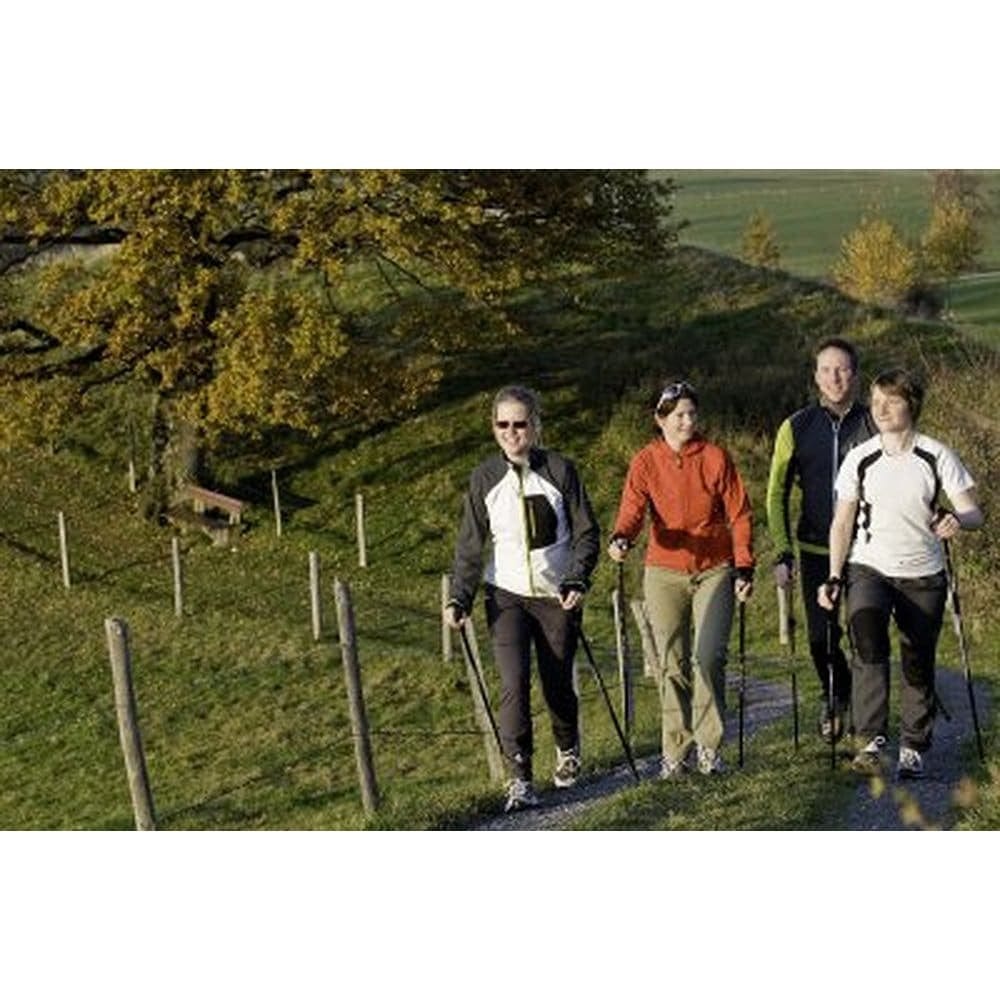
For exercise and fitness: Nordic walking uses specially designed poles and a coordinated arm-and-leg movement pattern. It engages the upper body as well as the legs, making it an option for people who want to add more activity to their walking routine.
For hiking and uneven terrain: If you enjoy trails, hills, or outdoor adventures, look for durable, adjustable poles with reliable locking mechanisms and tips suited to the surfaces you walk on.
The best walking poles are the ones that fit your activities—not necessarily the ones with the most features.
2. Look for Comfortable, Ergonomic Grips
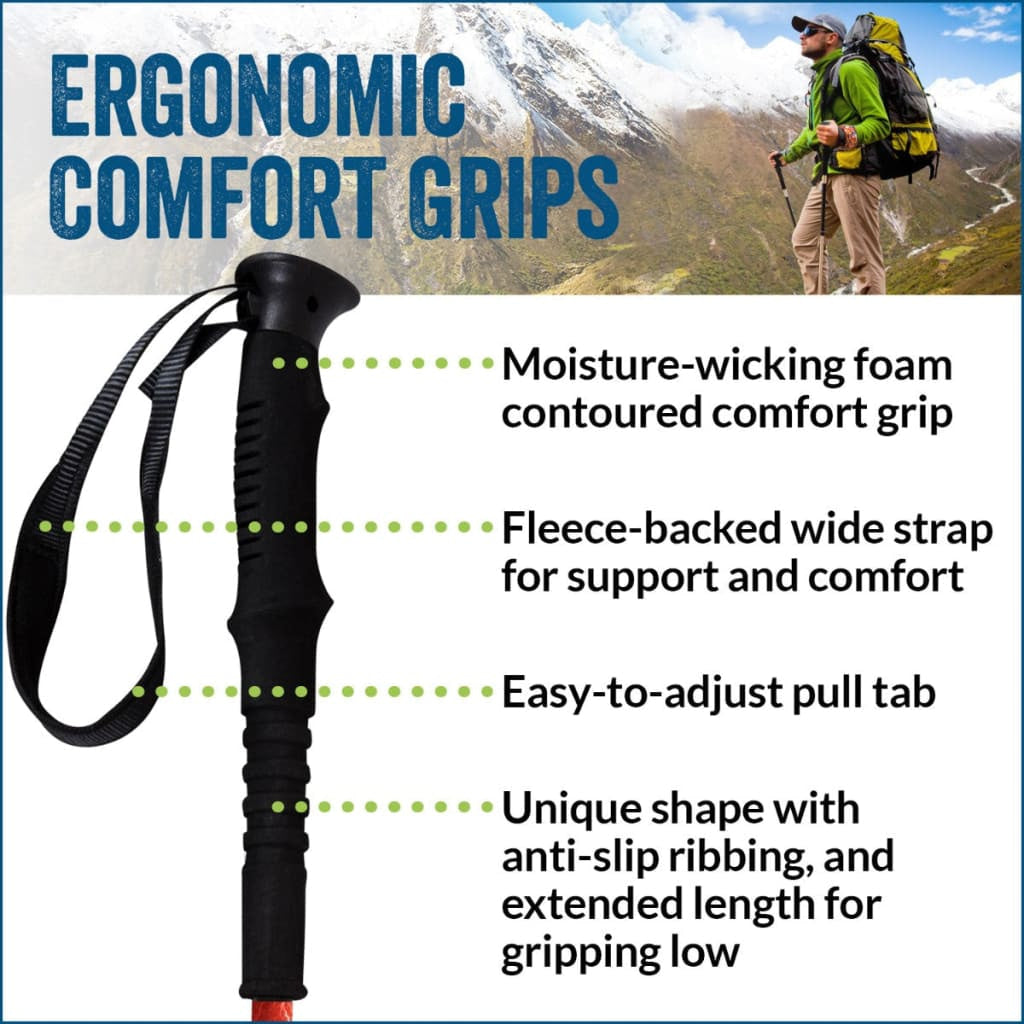
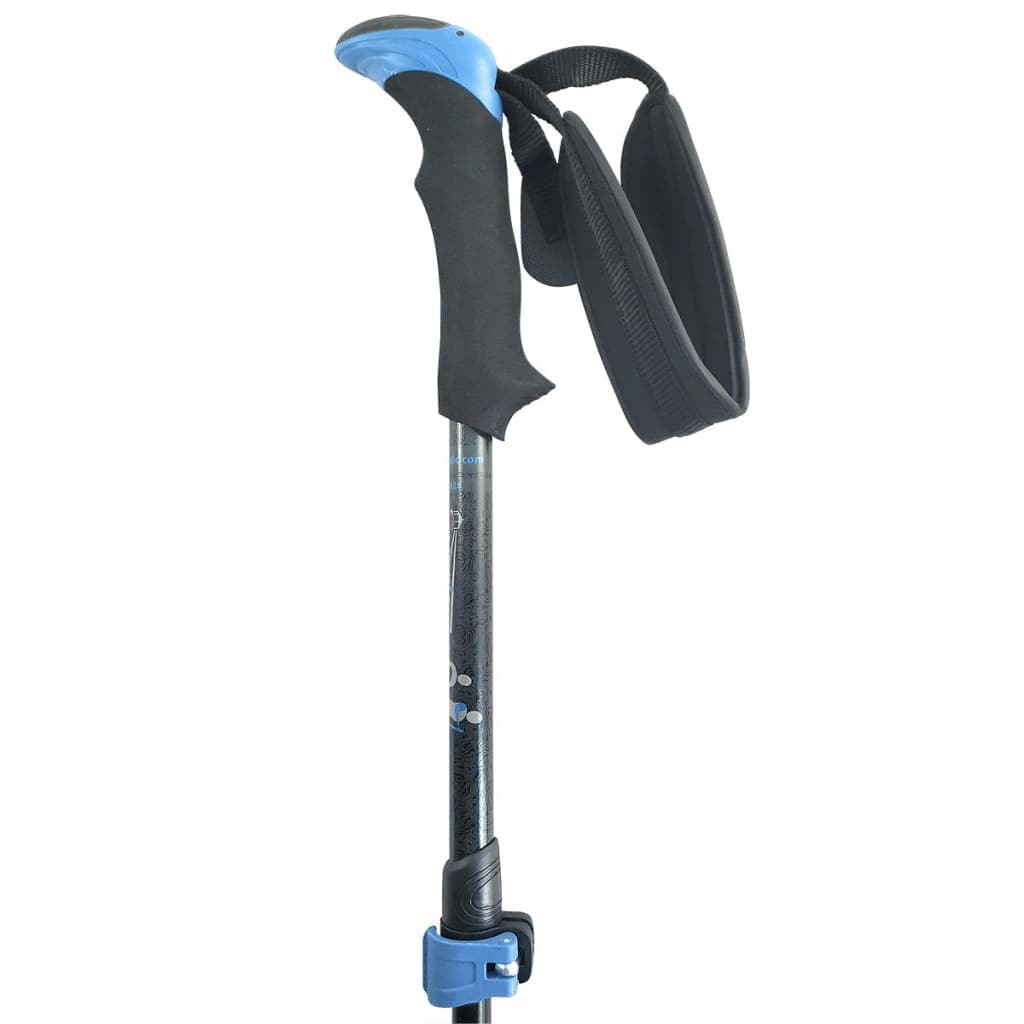
Grip comfort is one of the most important considerations when choosing walking poles, especially if you experience hand discomfort, arthritis, or reduced grip strength.
Look for grips that feel natural in your hands and allow you to hold the poles without squeezing too tightly. A comfortable grip can make a big difference during longer walks.
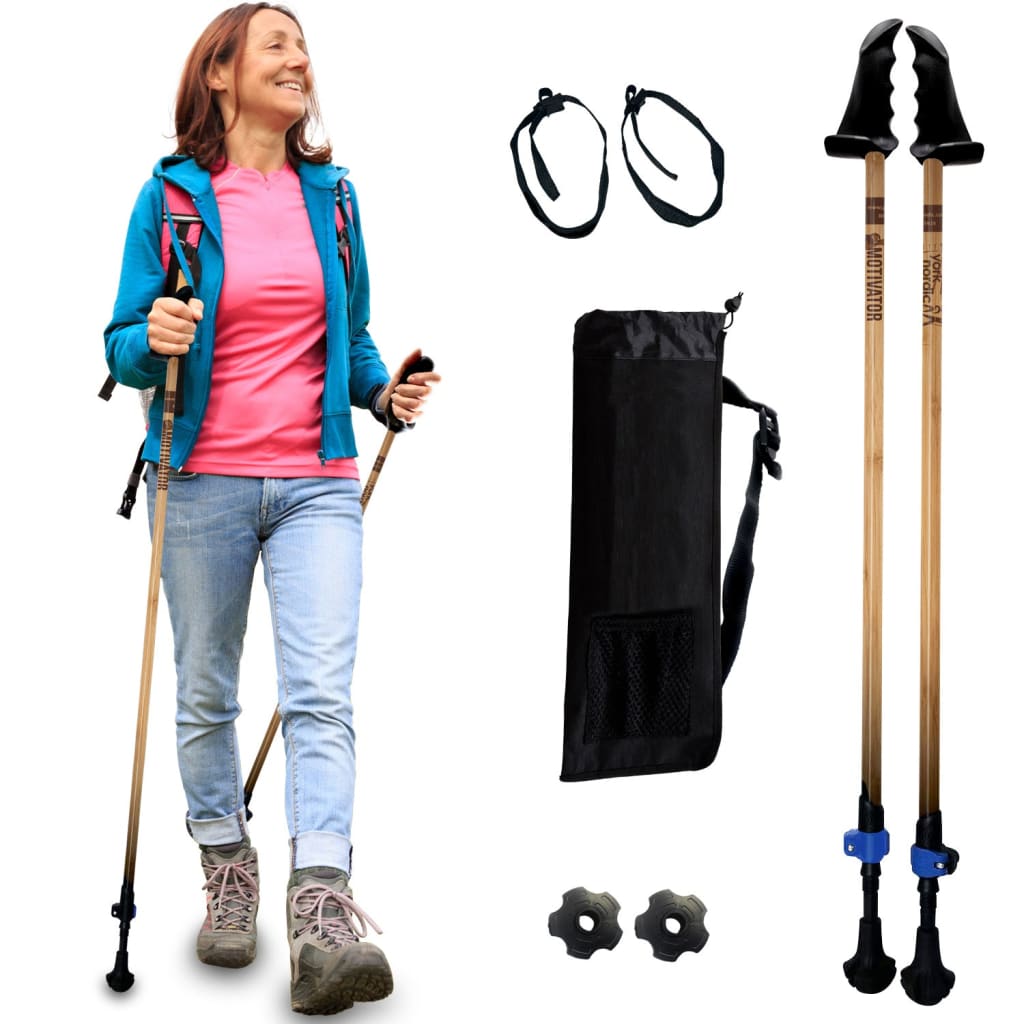
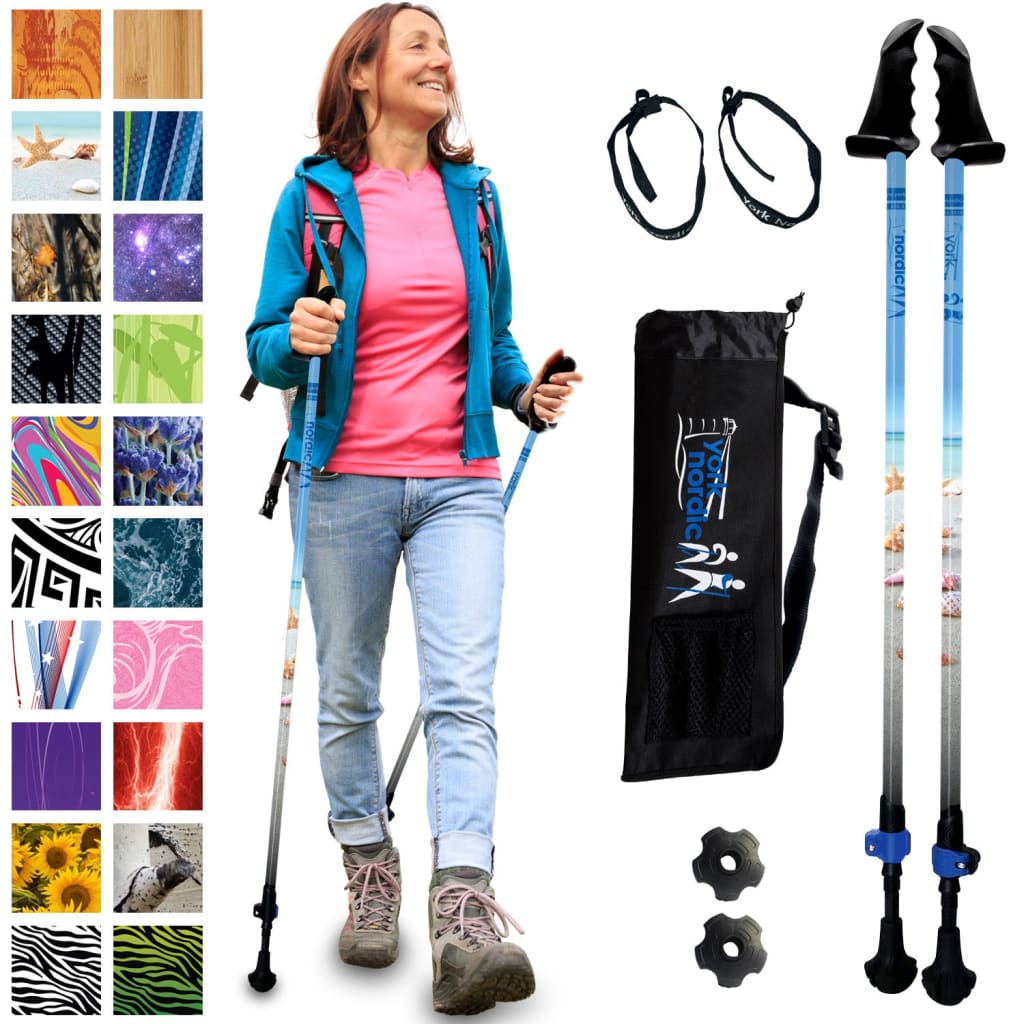
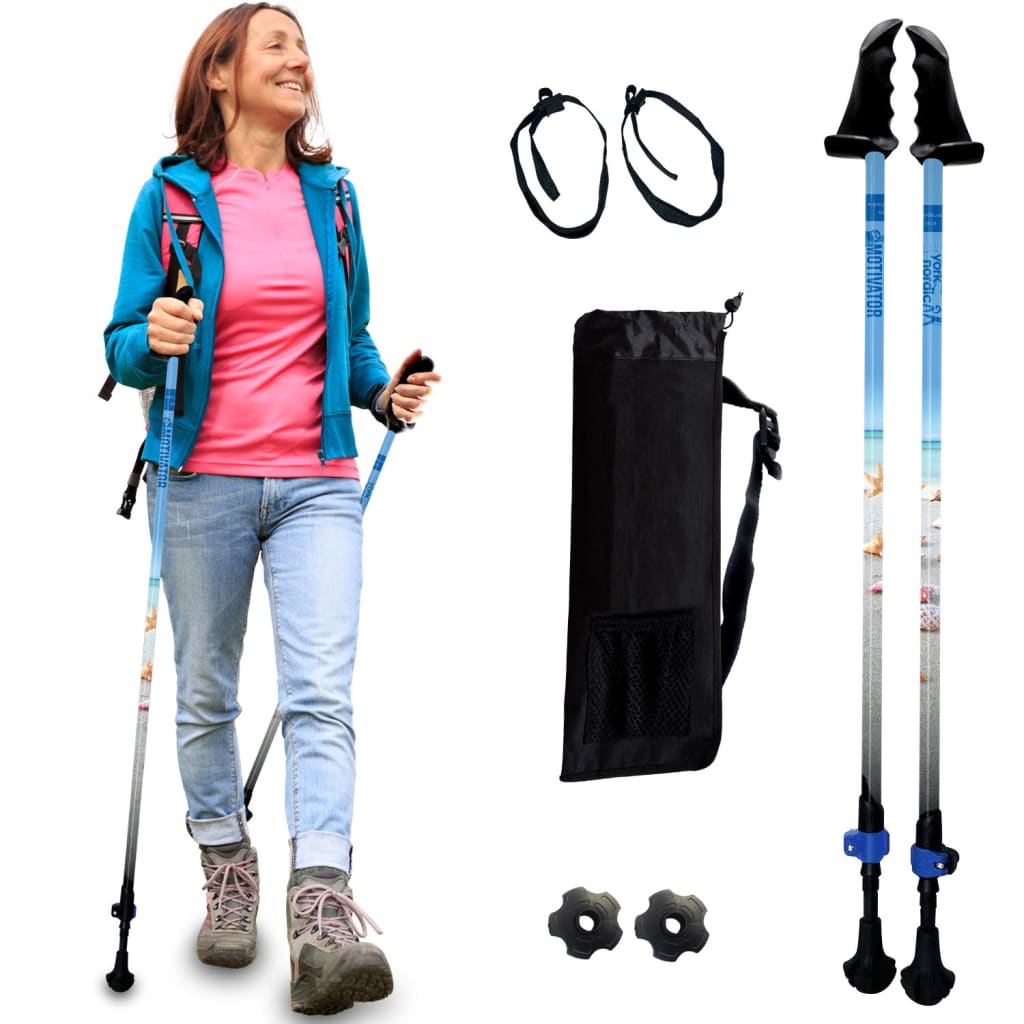
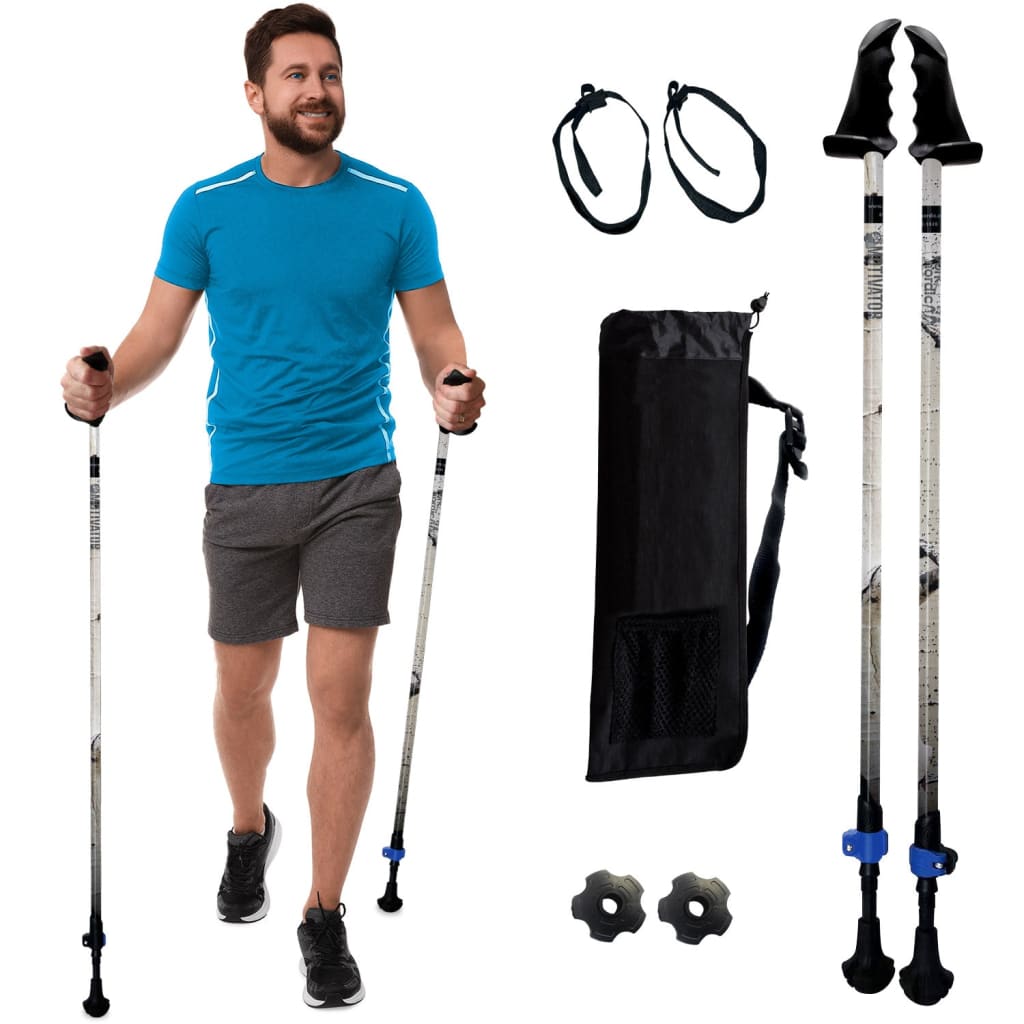
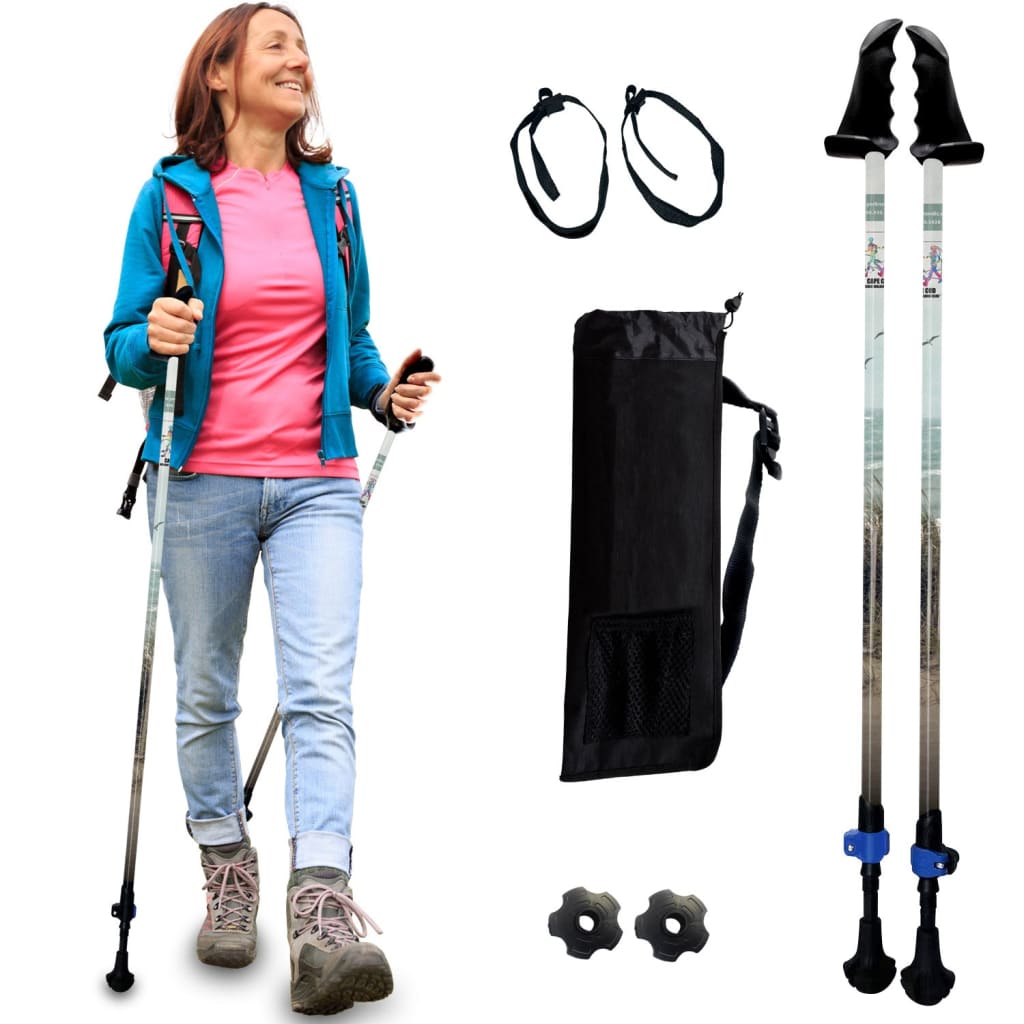
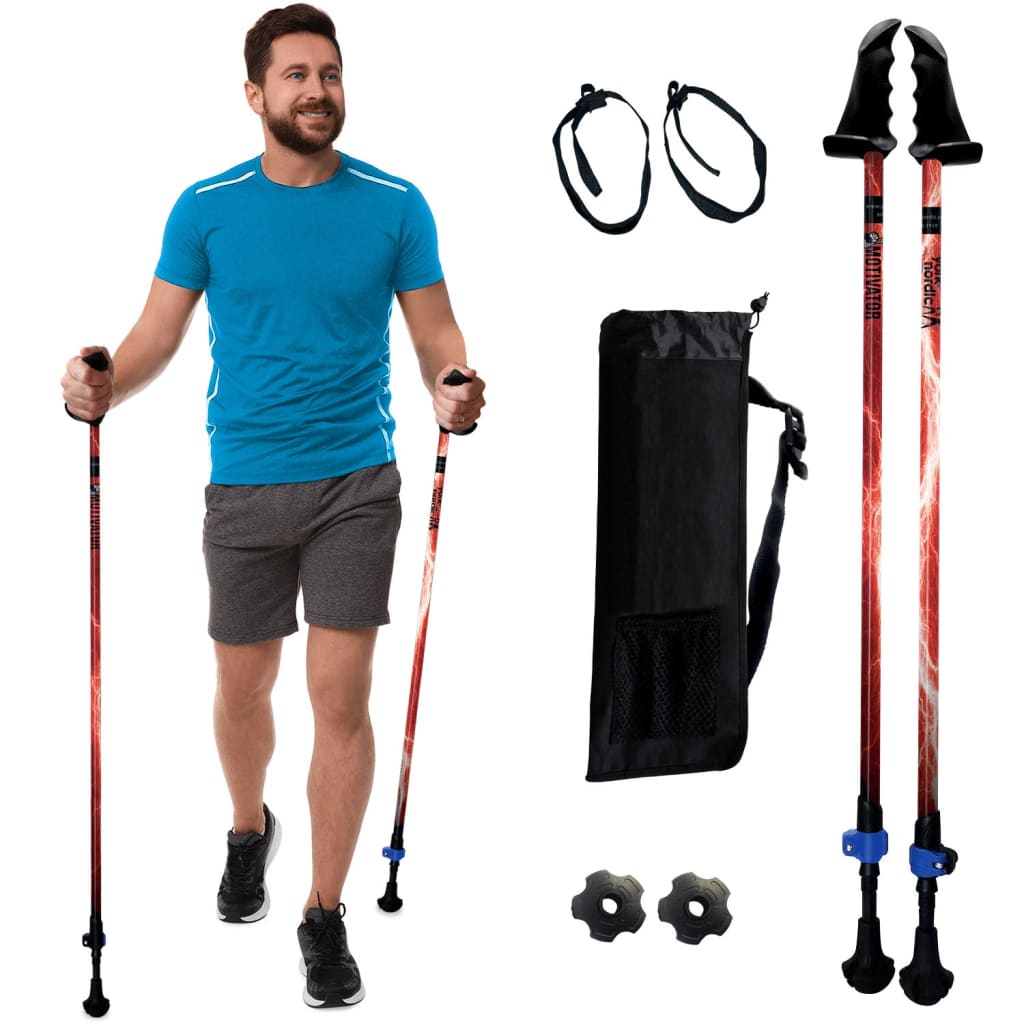
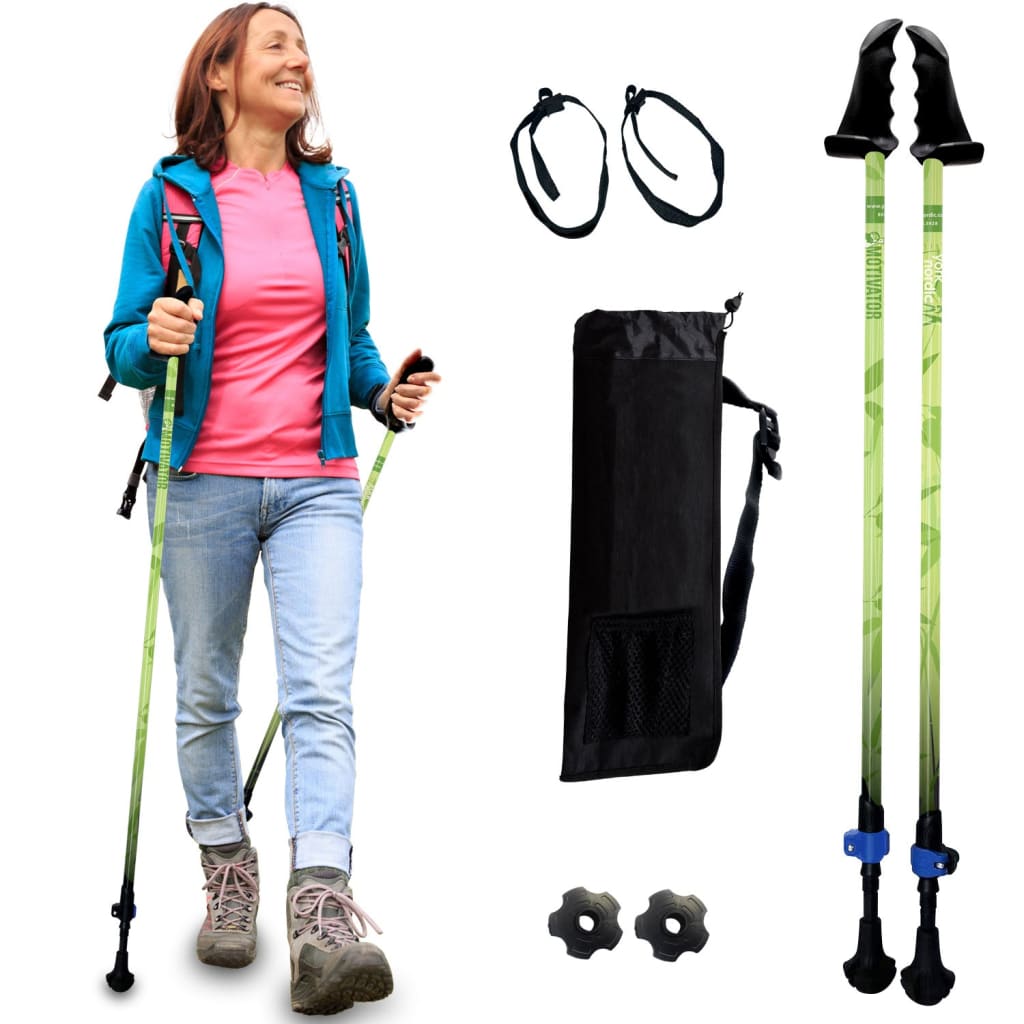
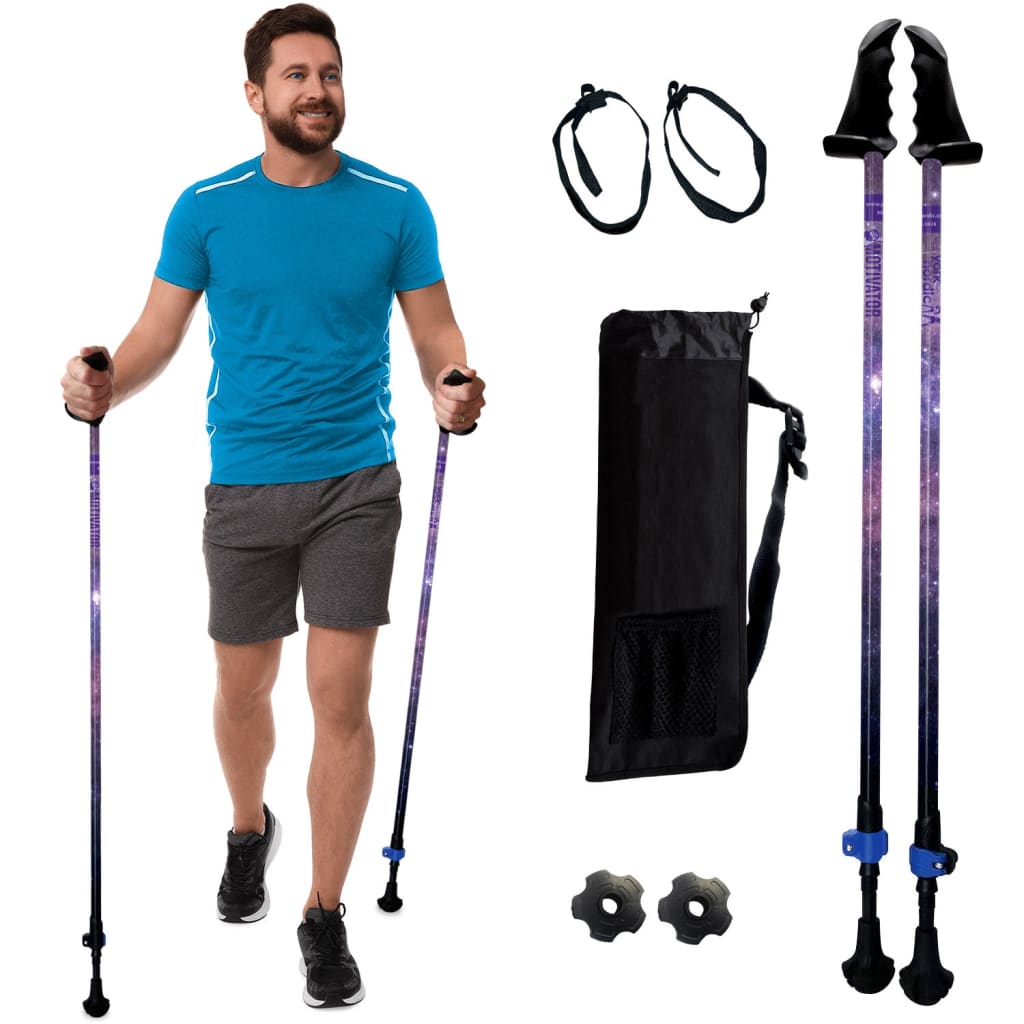
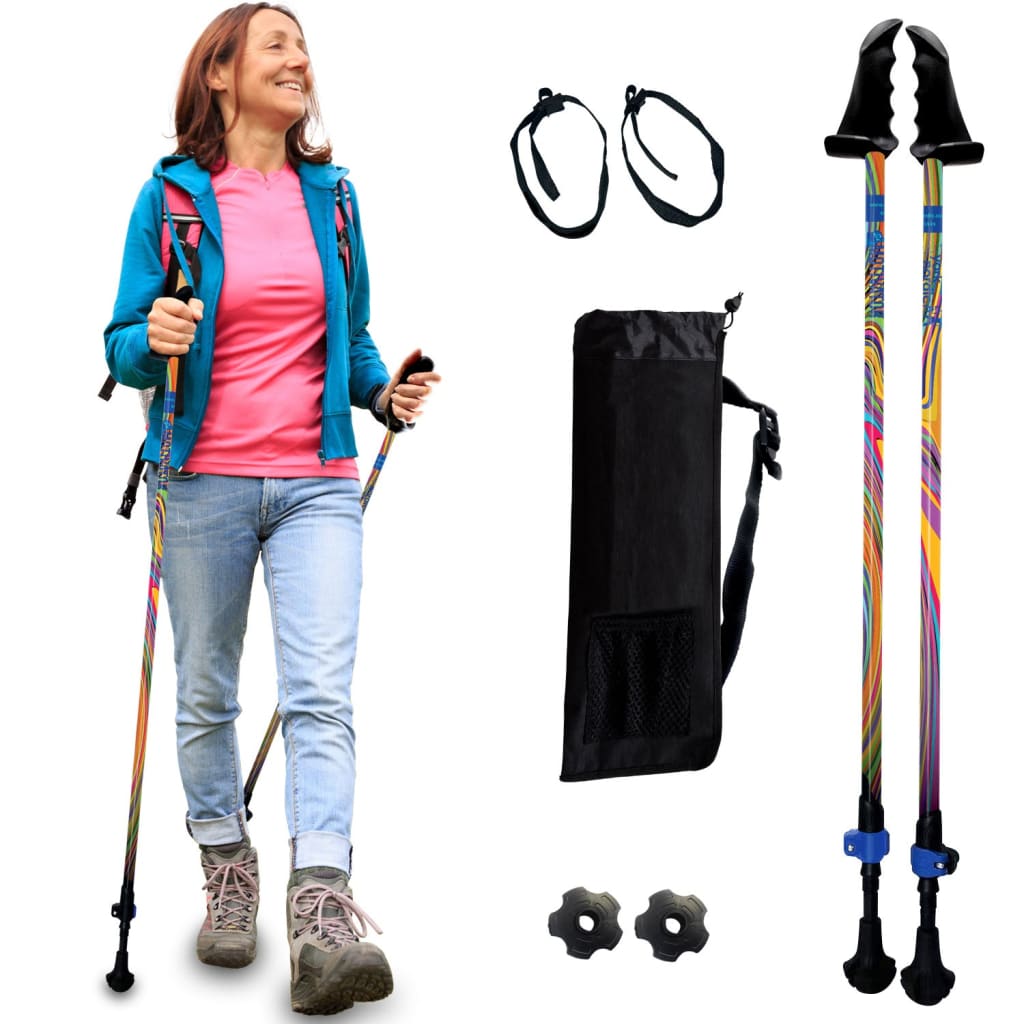
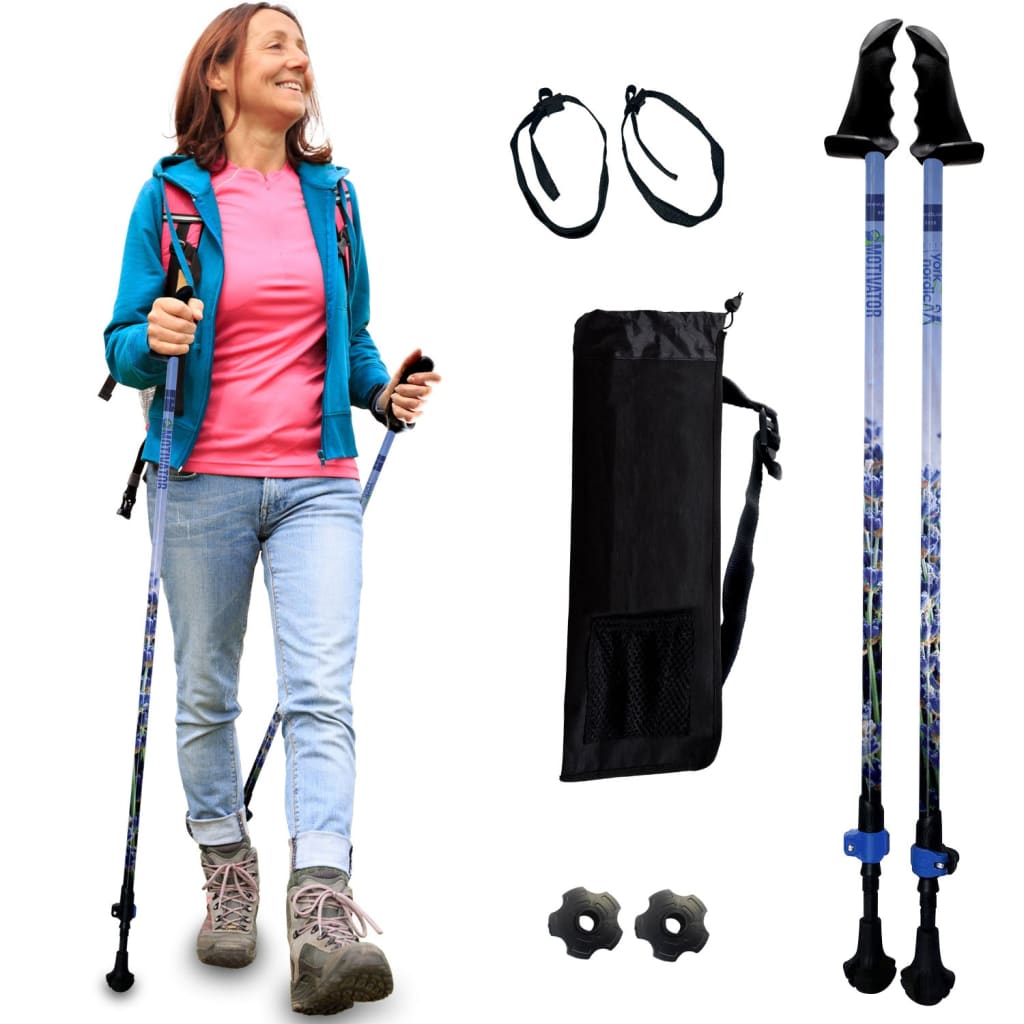
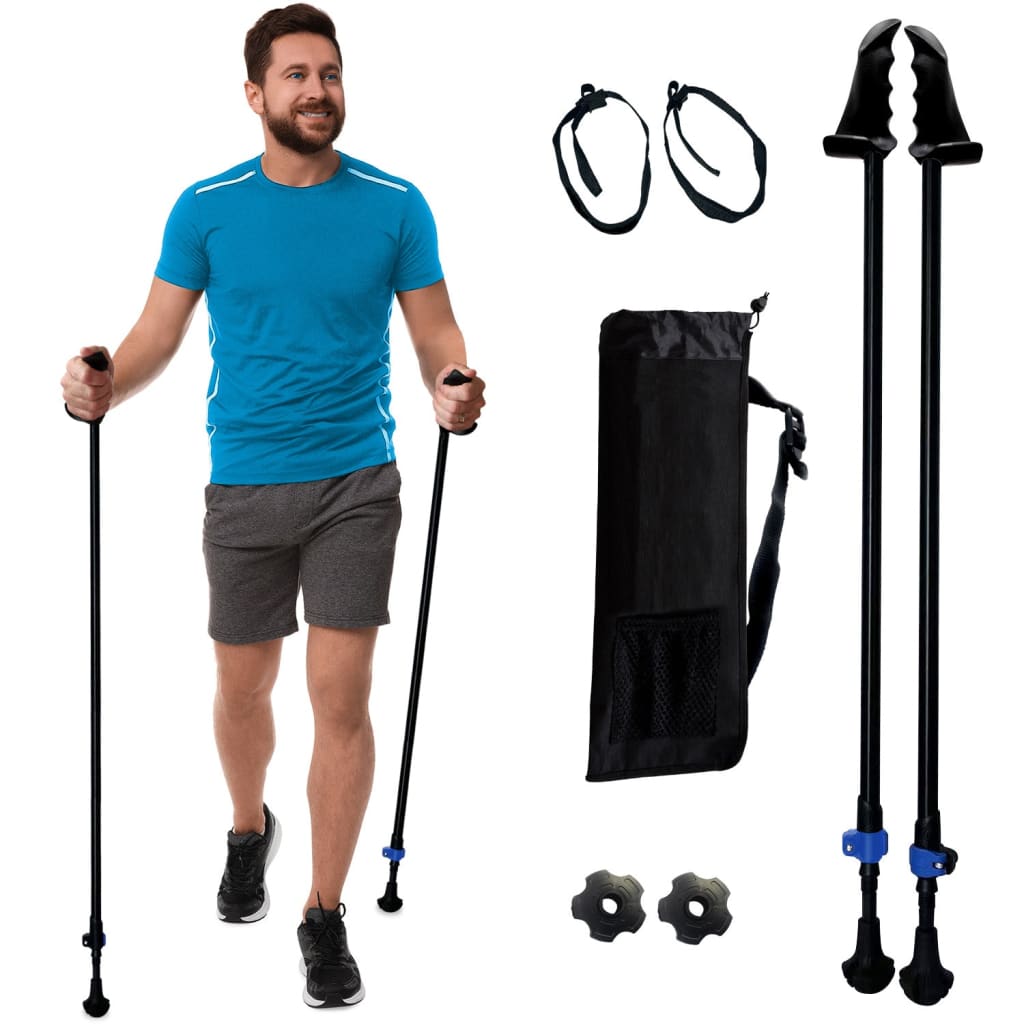
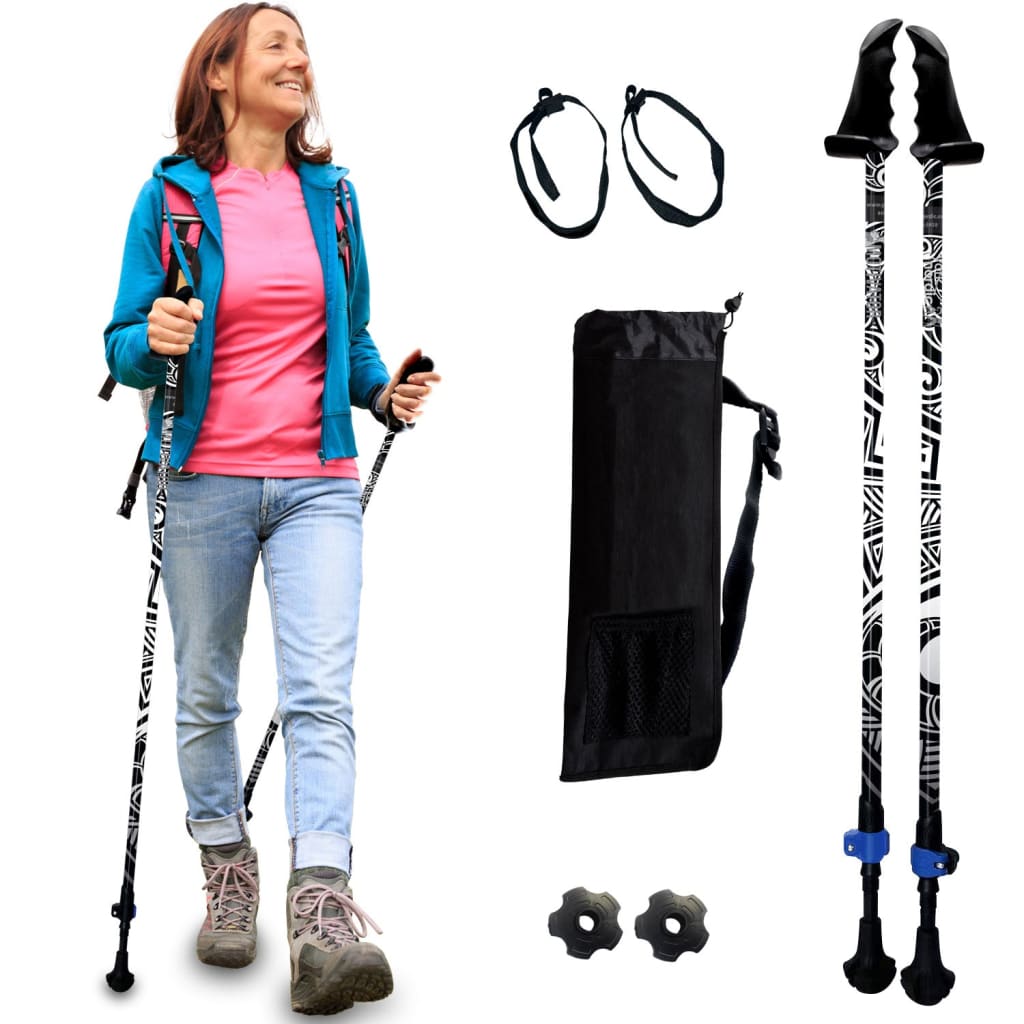
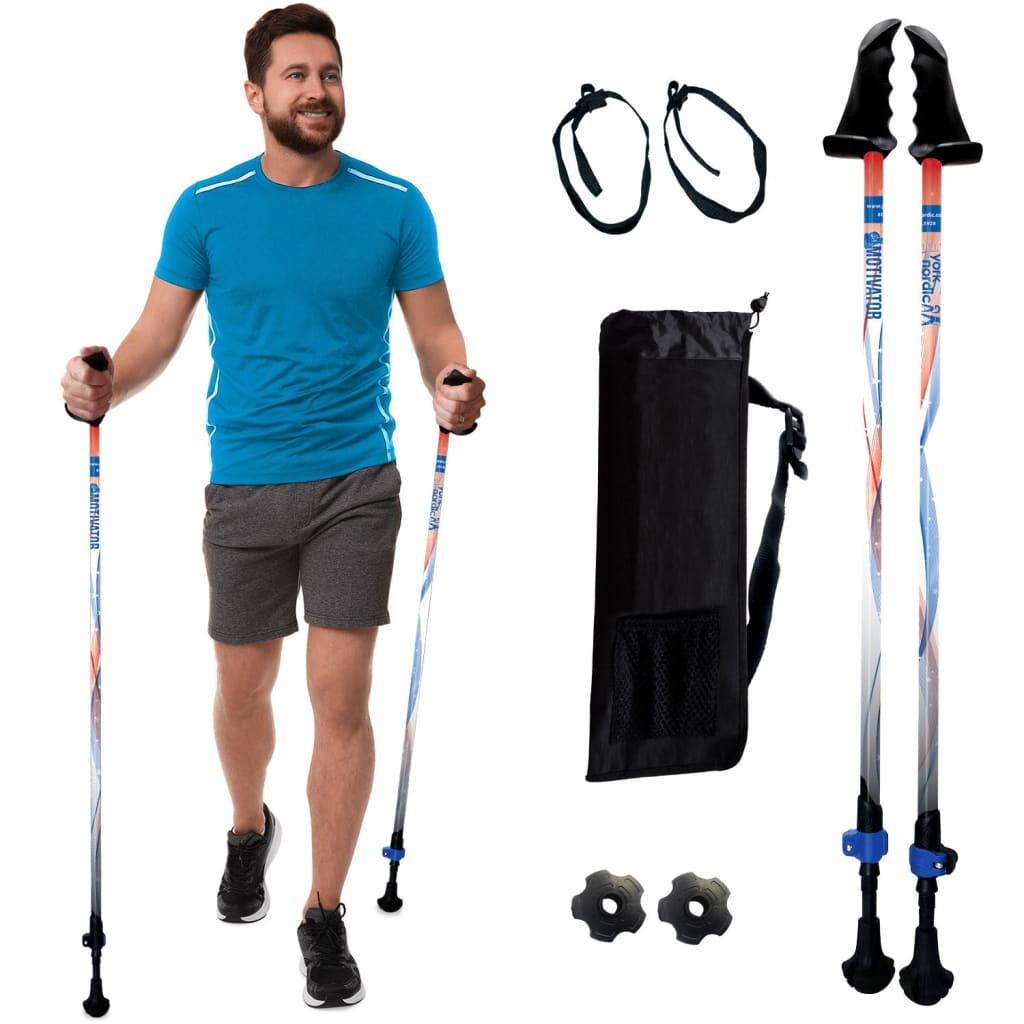
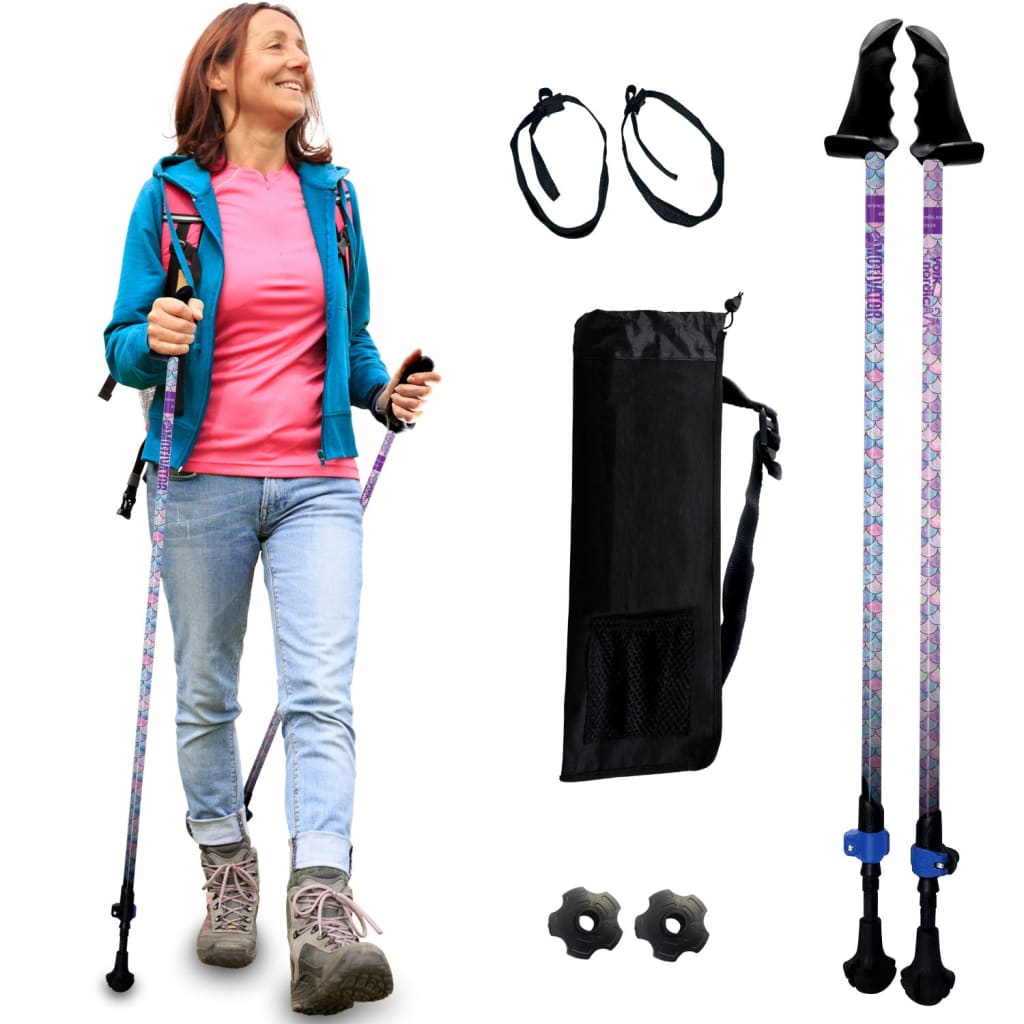
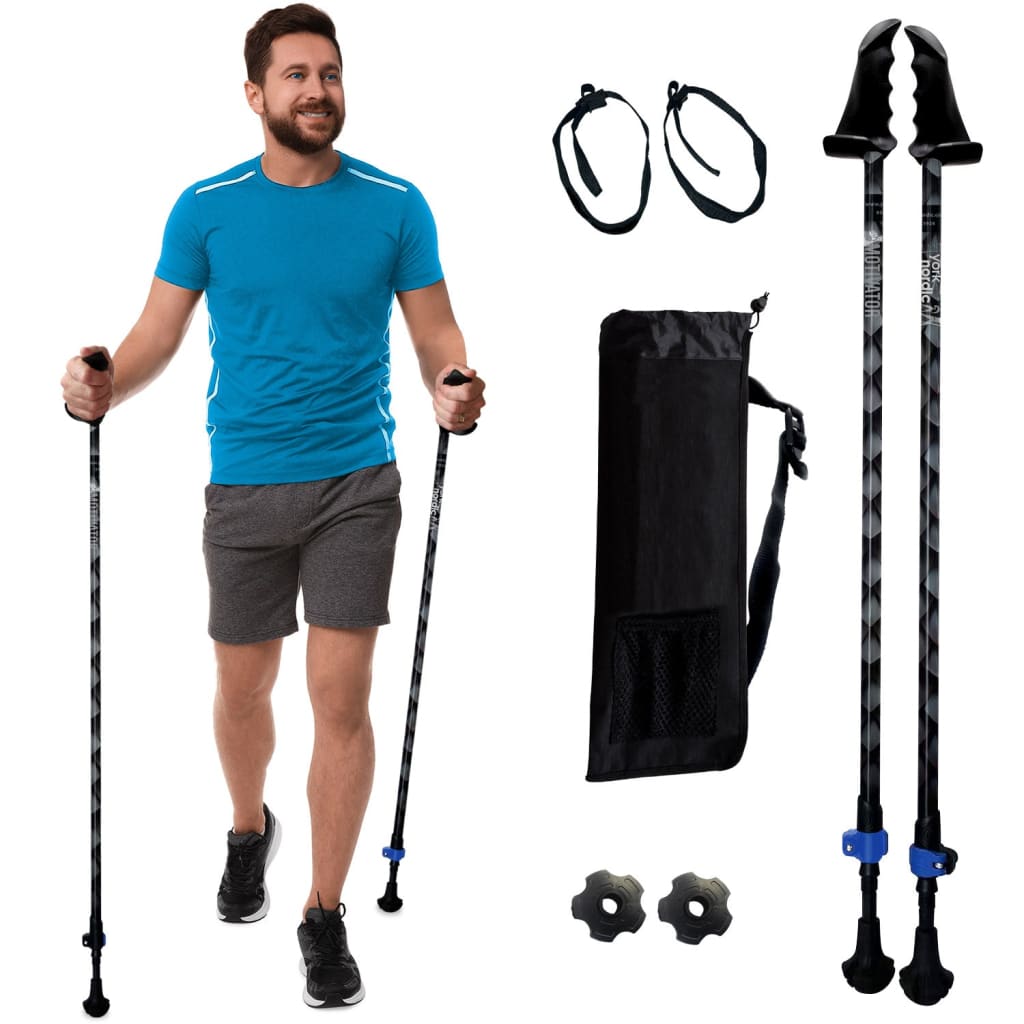
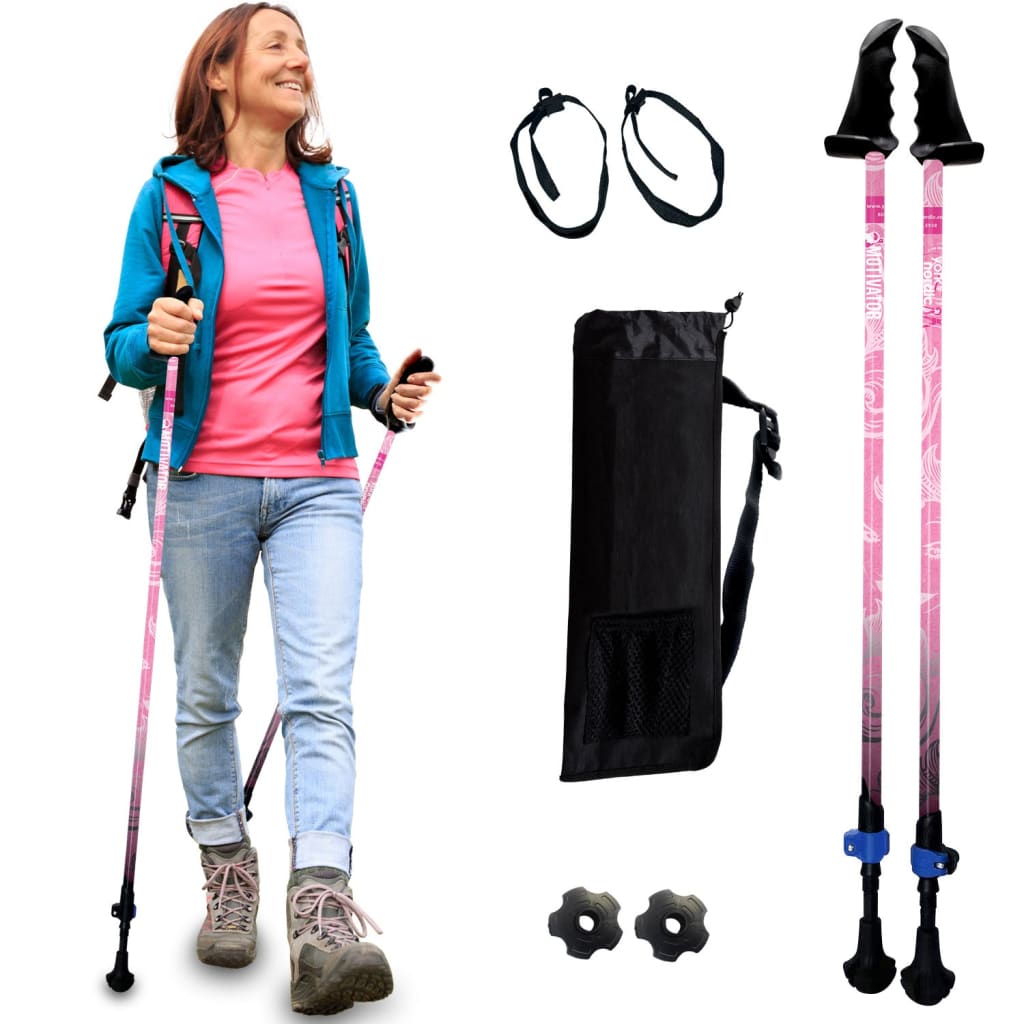
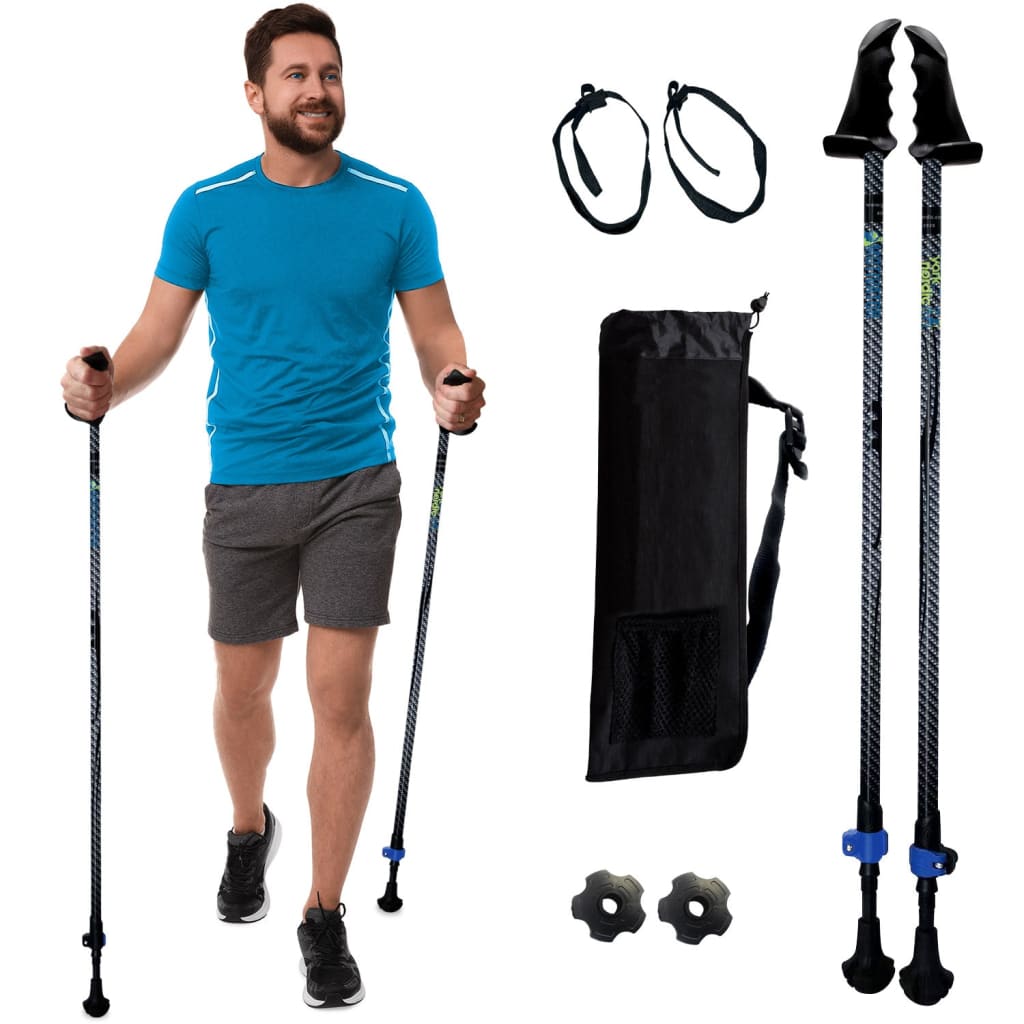
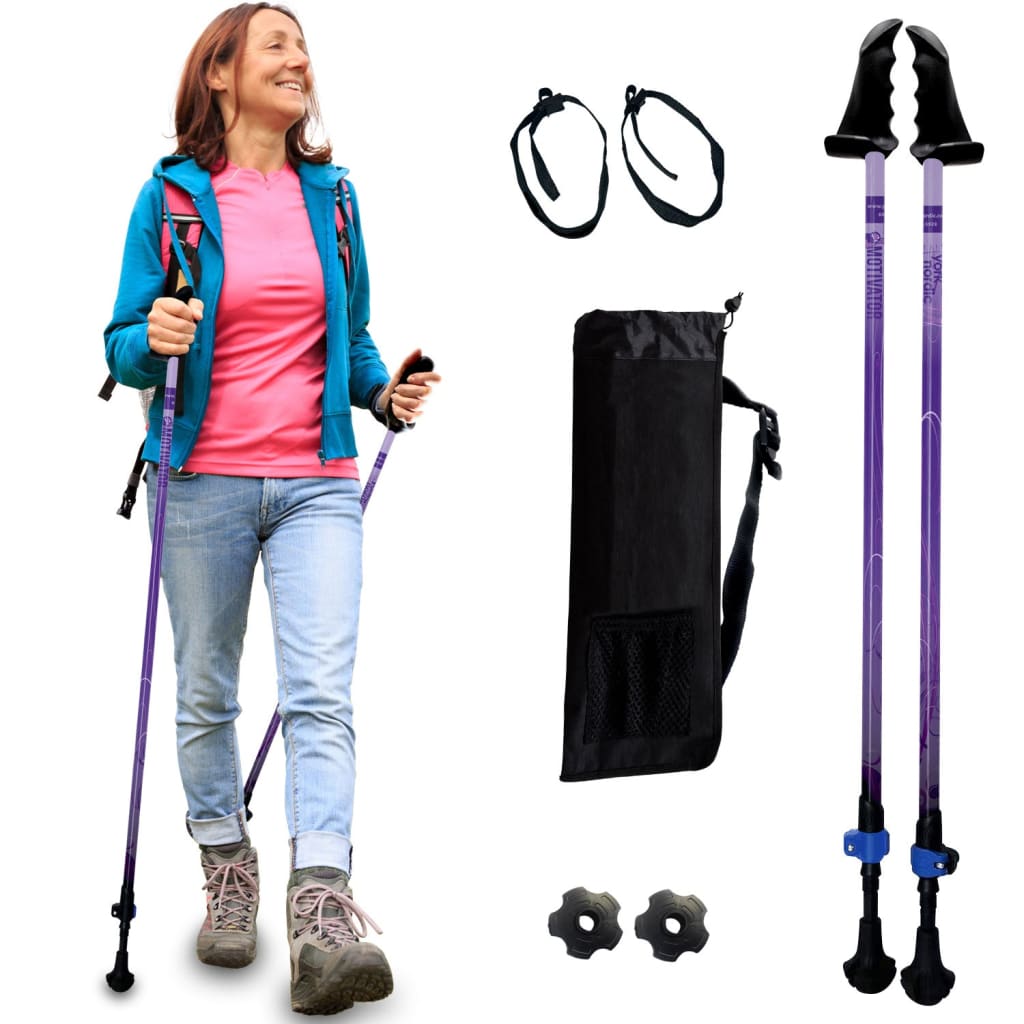
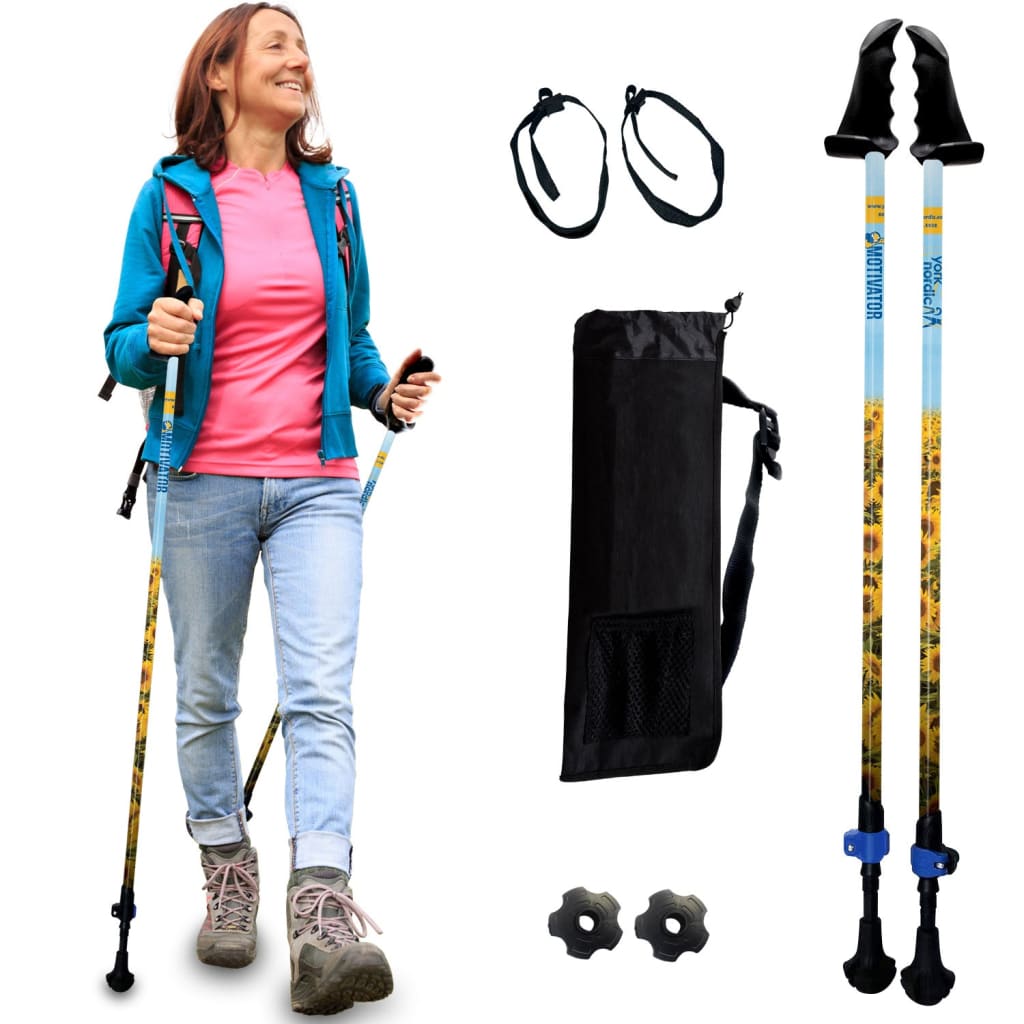
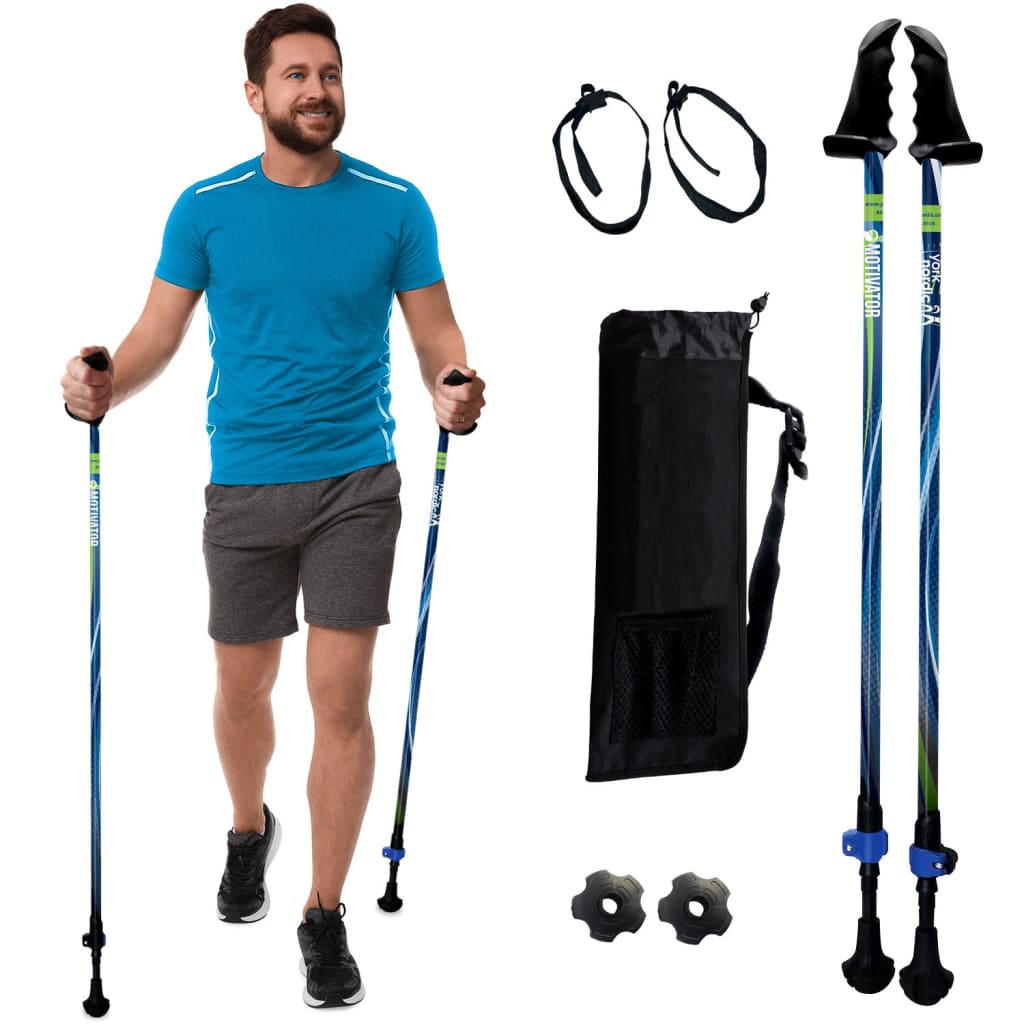
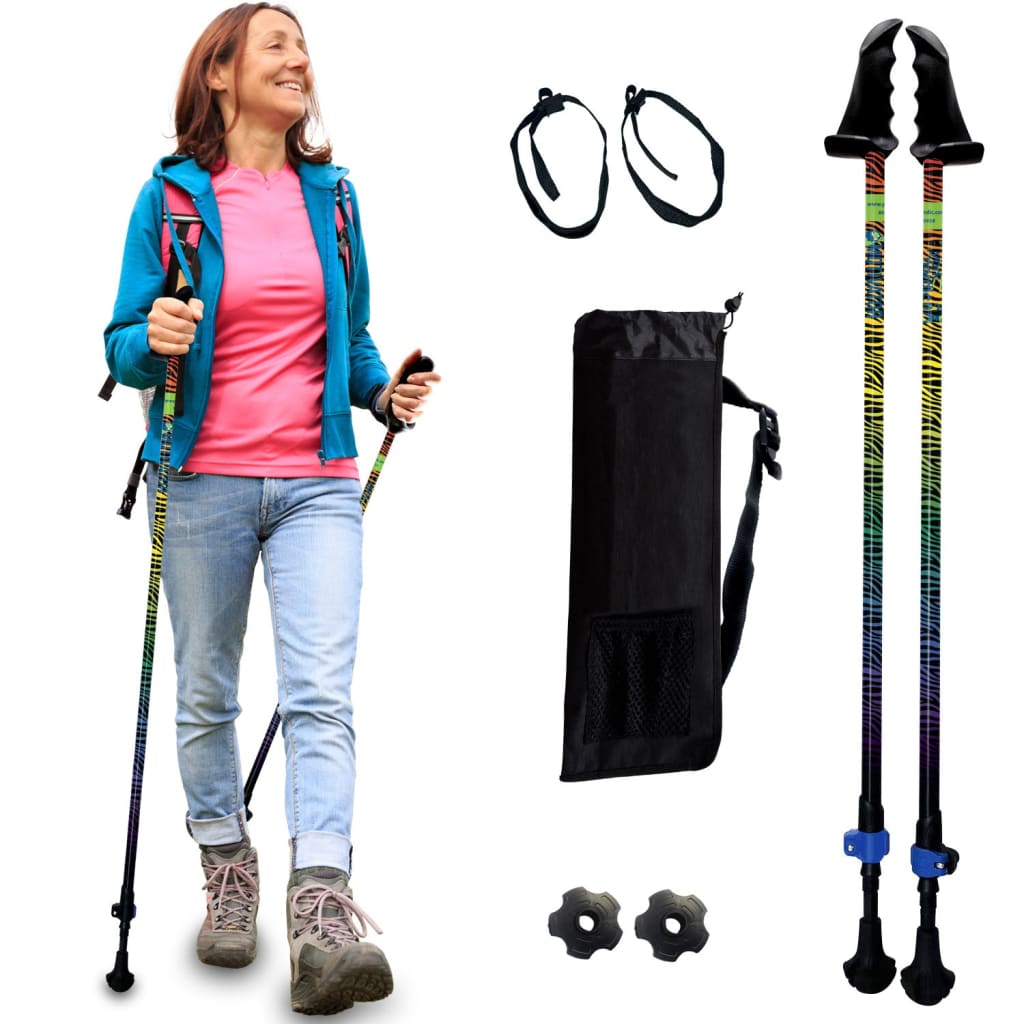
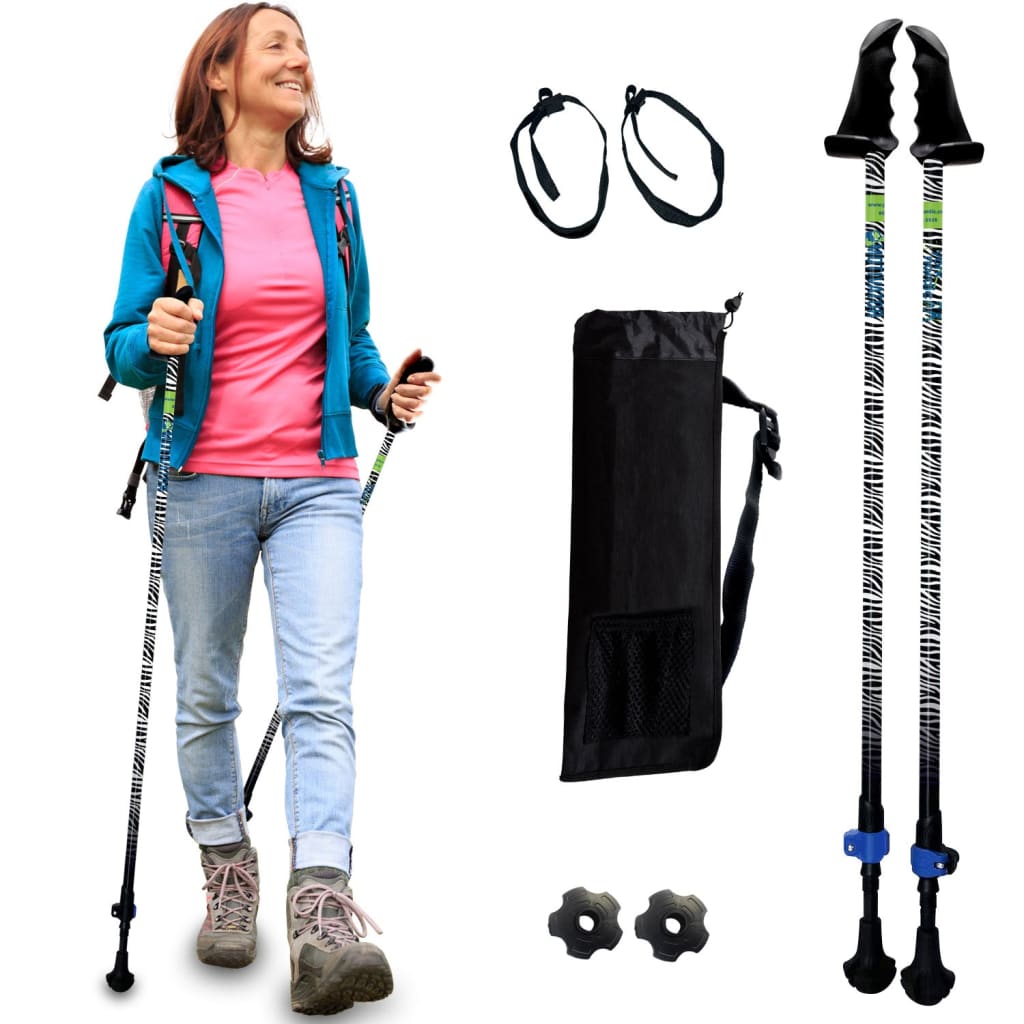
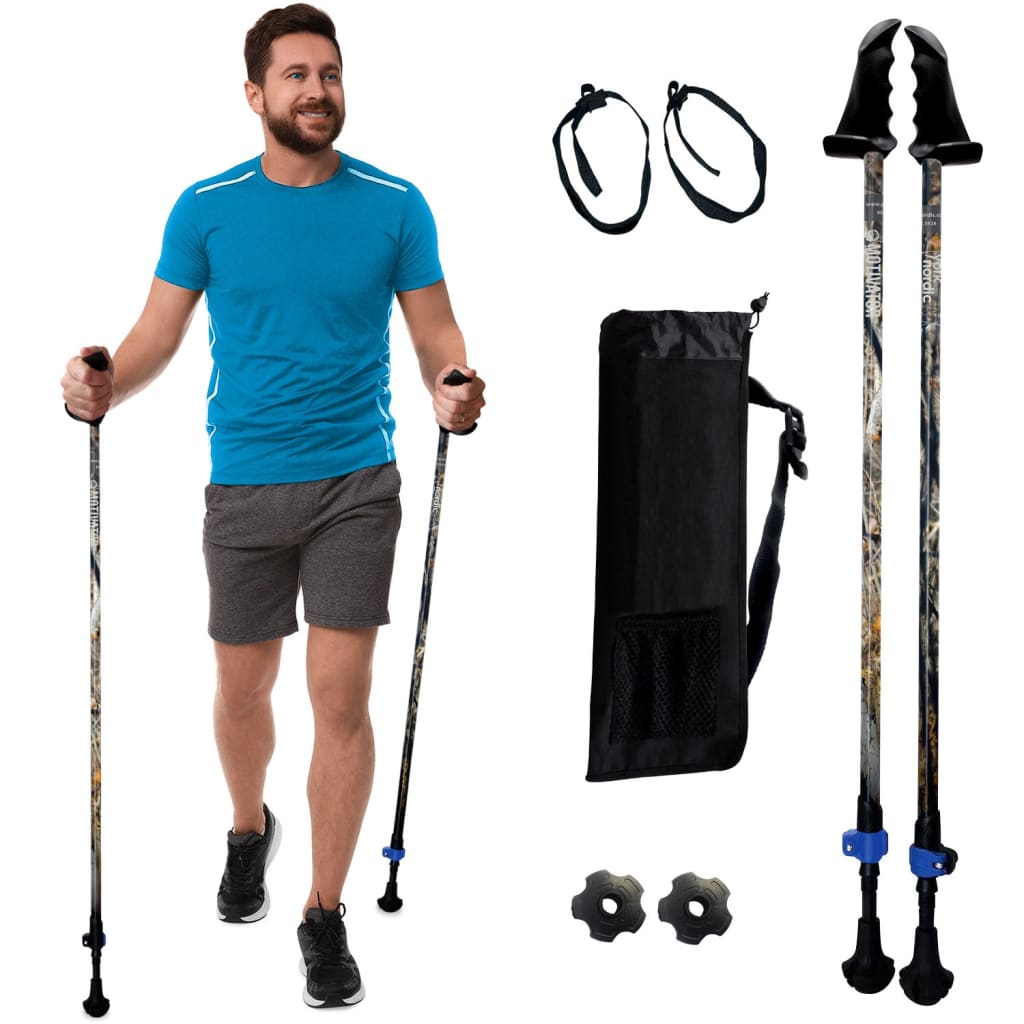
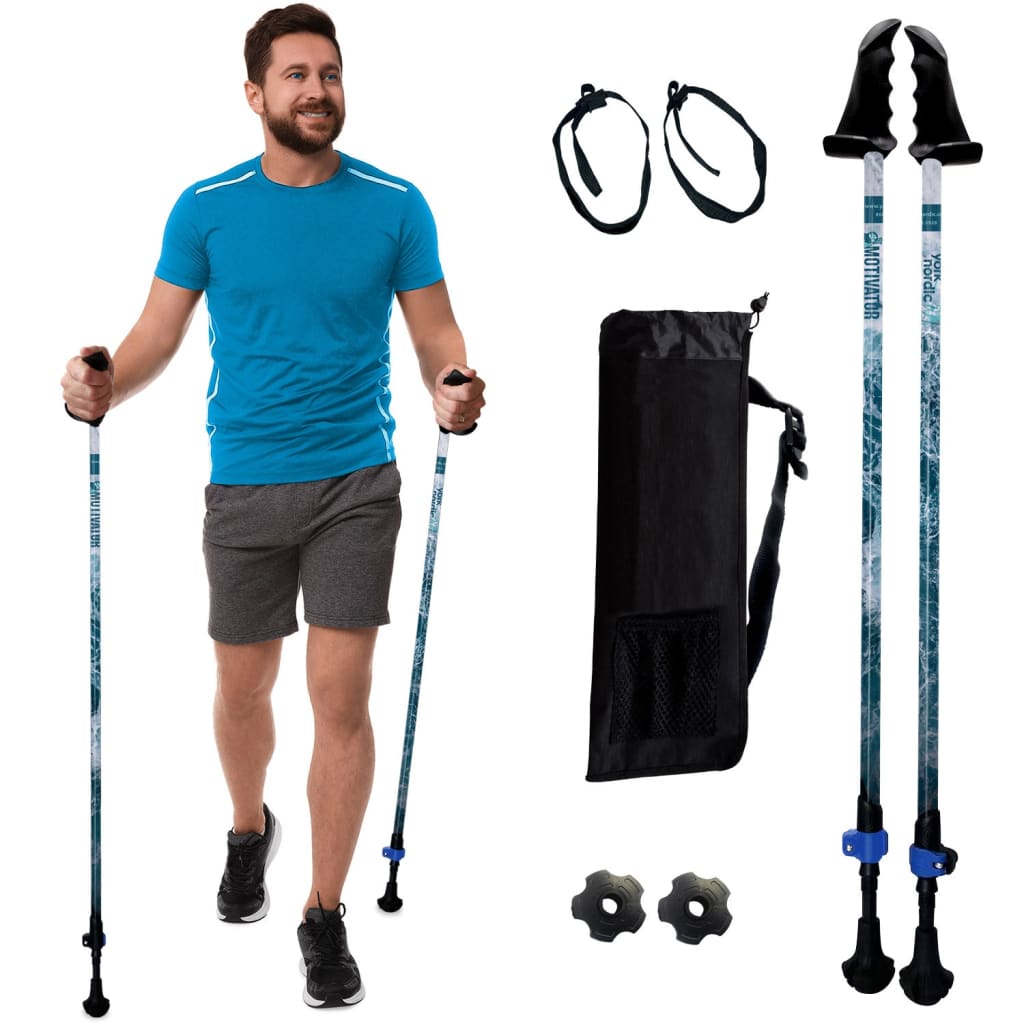
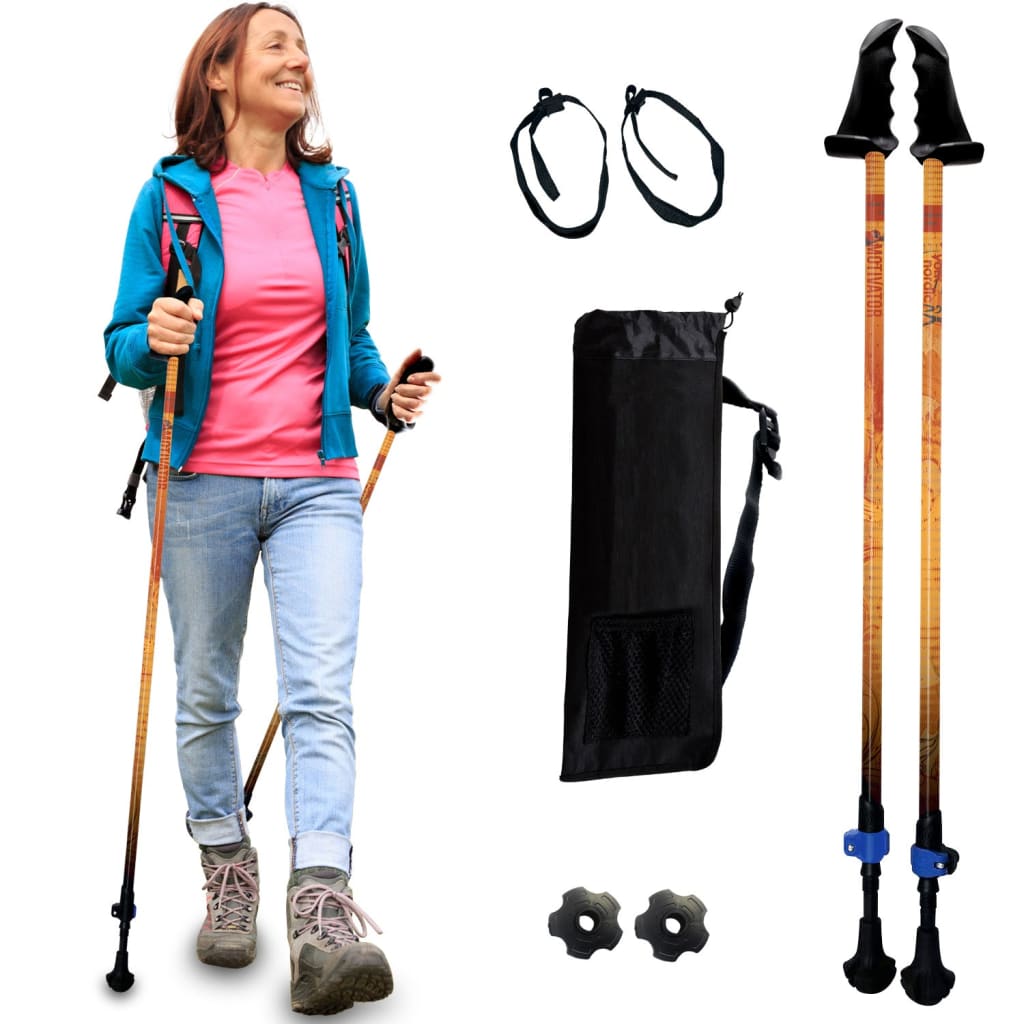
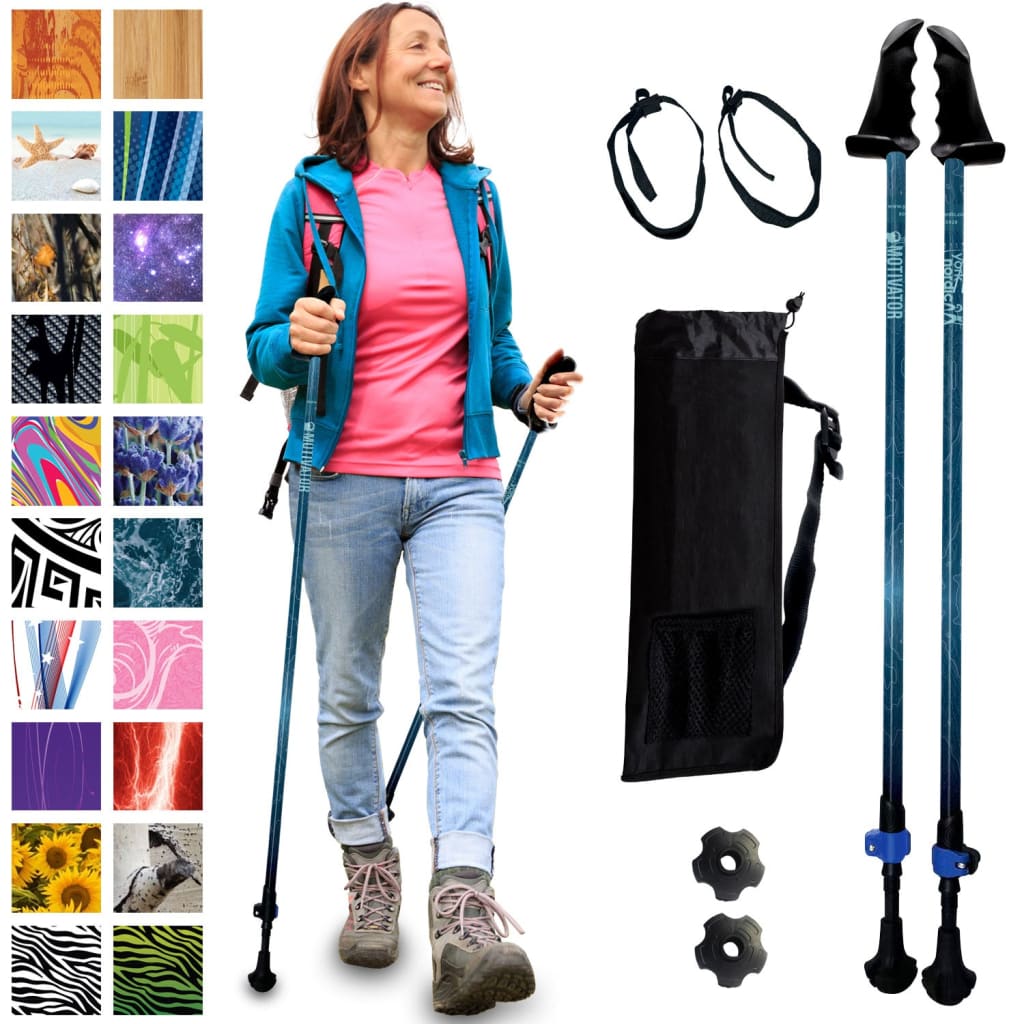
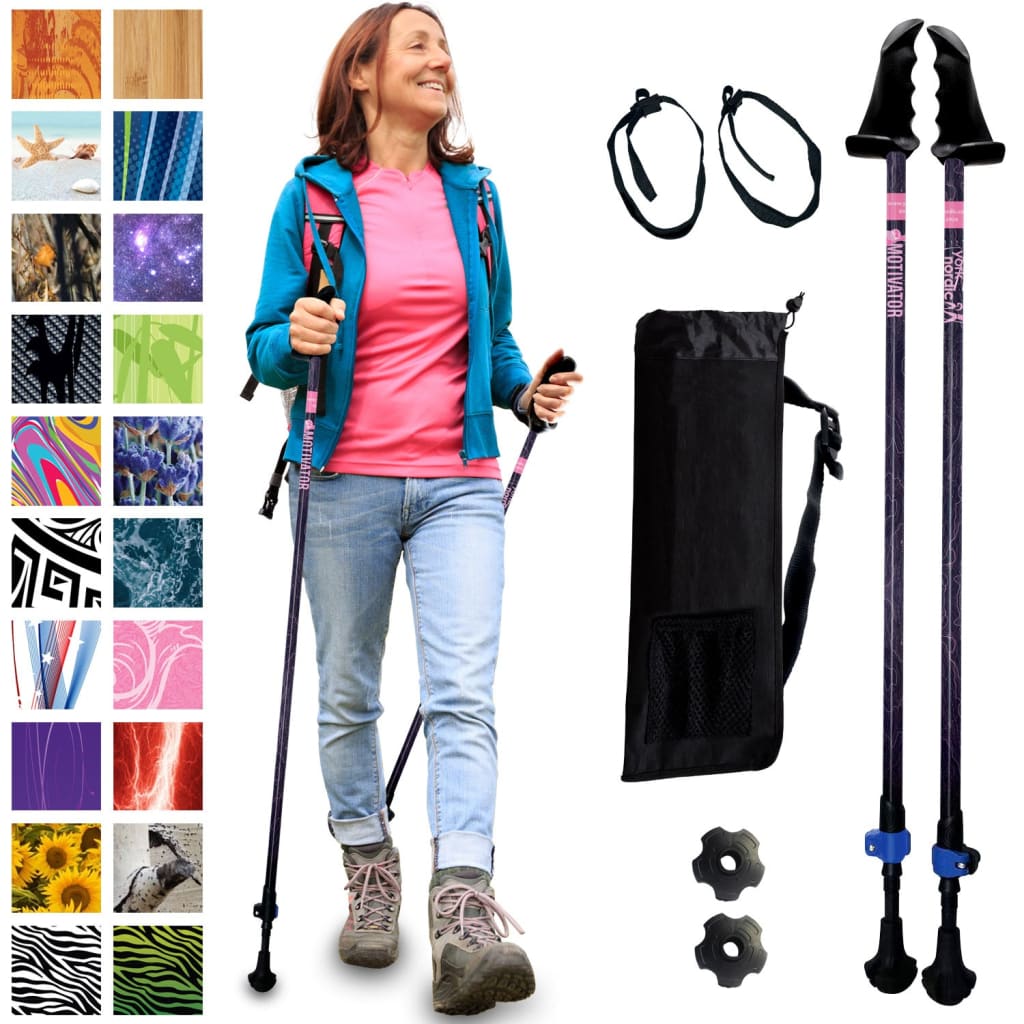
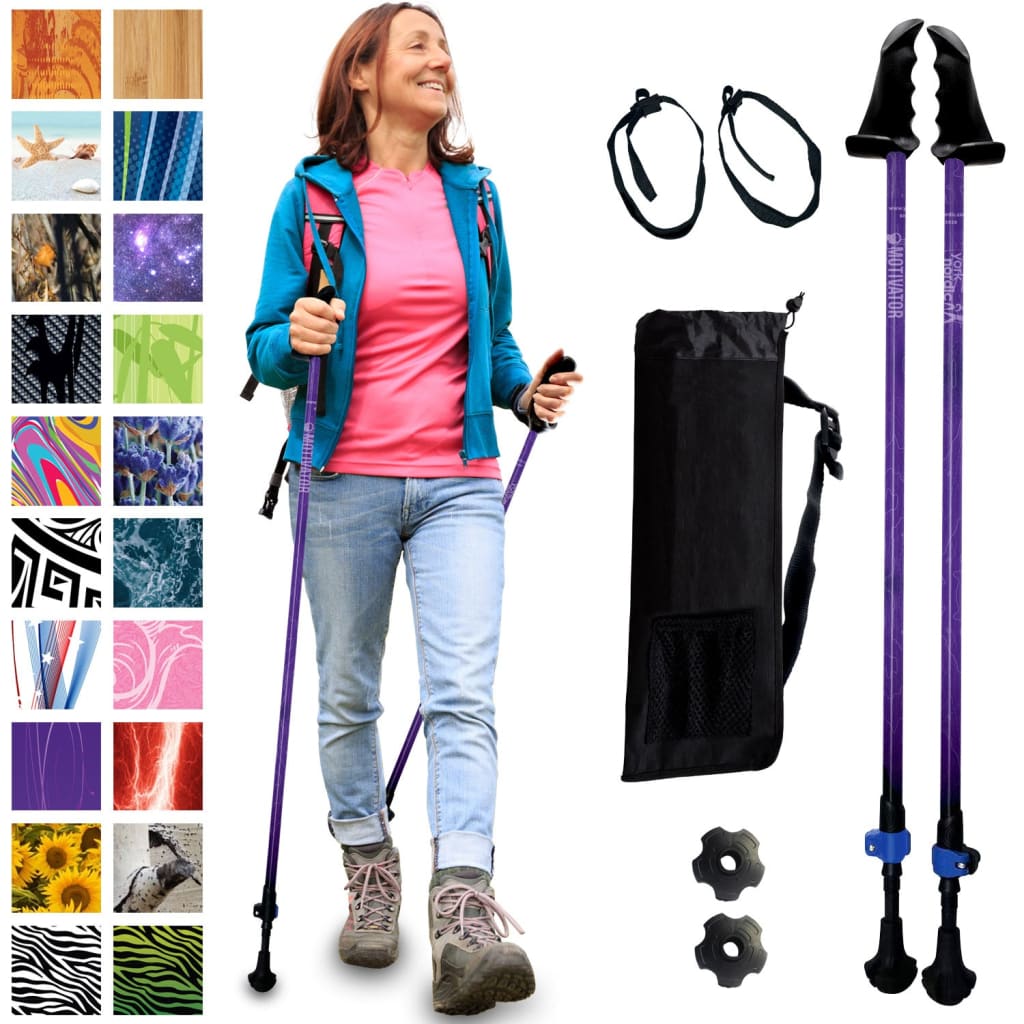
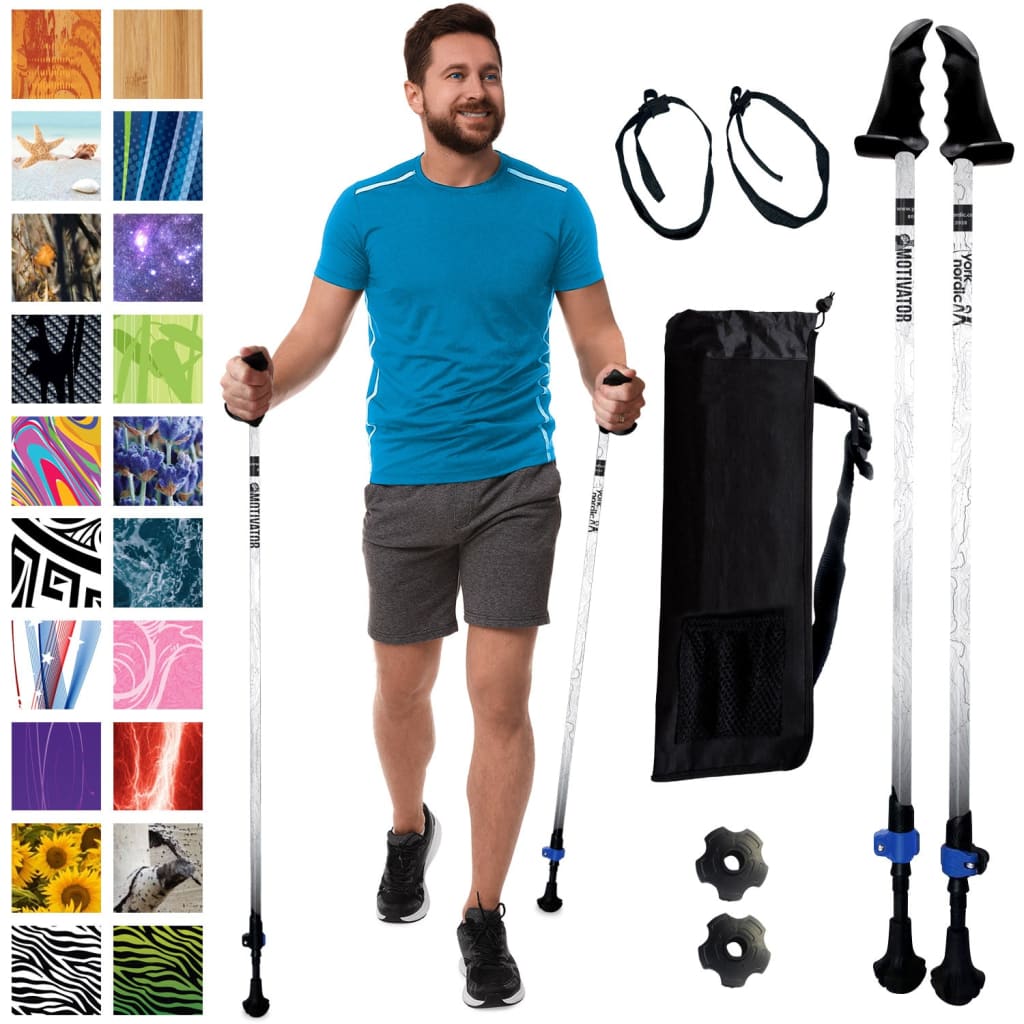
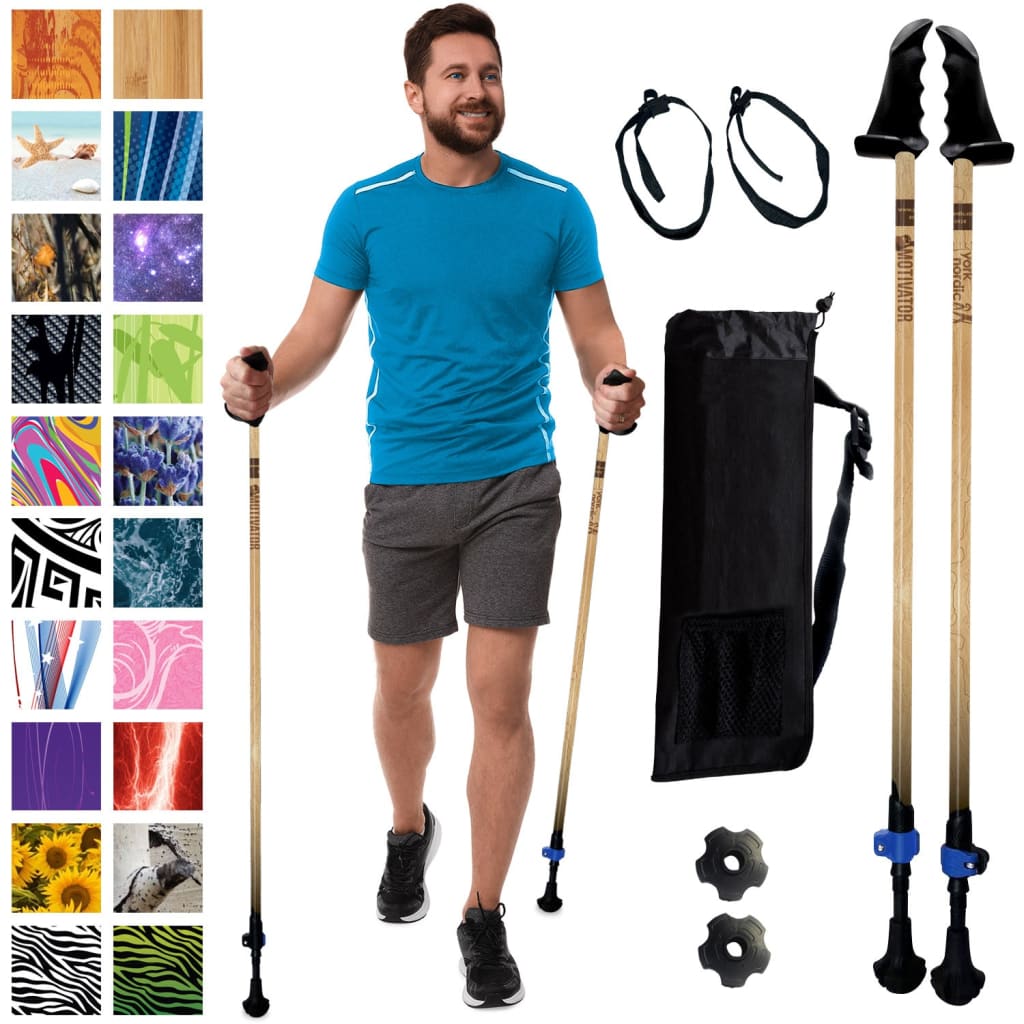
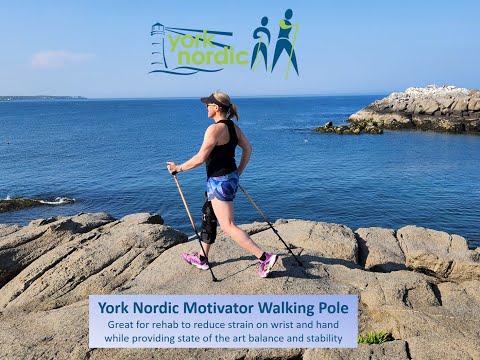
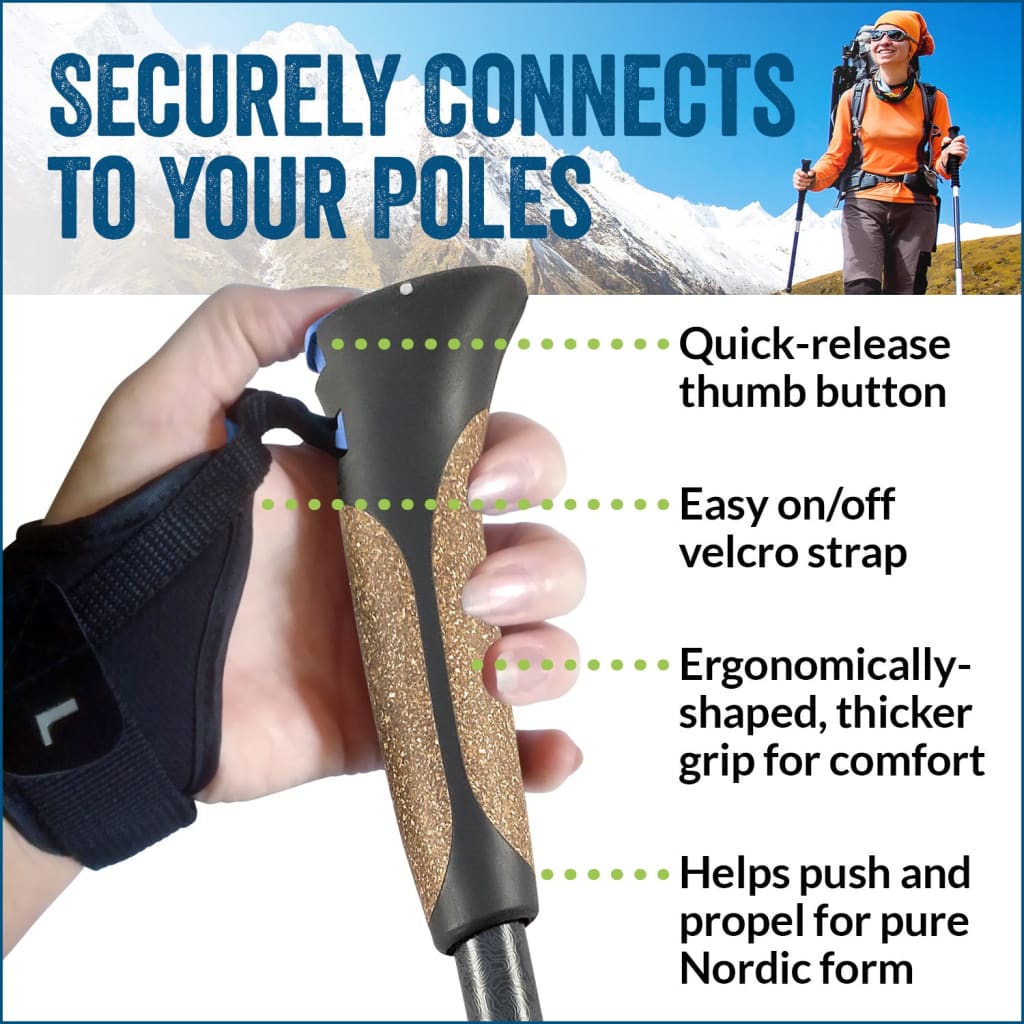
Some walking poles feature contoured grips designed to fit the shape of the hand. Certain designs also offer additional thumb support, which may be worth considering if thumb joint discomfort makes gripping traditional poles difficult (Check out our Motivator!).
A simple test: Hold the poles as you would while walking. Your hands should feel comfortable, and you shouldn't need to clench your fingers tightly to maintain control.
If you have arthritis or limited hand function, try different grip styles when possible to find what feels best for you.
3. Choose the Right Pole Height
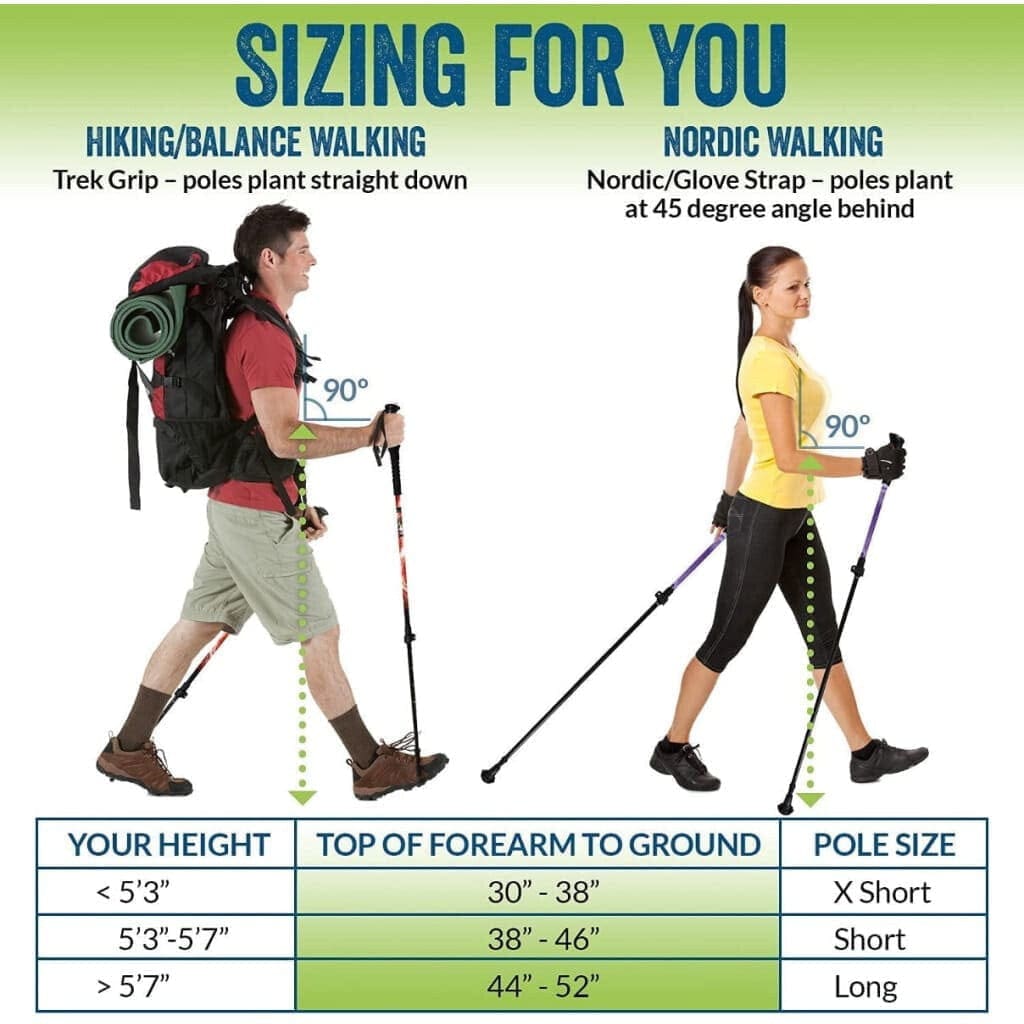
Proper pole height matters. Poles that are too long or too short can affect your posture, arm movement, and comfort.
For many walking poles, a useful starting point is to adjust the length so your elbows are bent at approximately 90 degrees when the tips rest on the ground beside your feet and you hold the grips naturally. This is a general guideline, not a one-size-fits-all rule. The ideal adjustment can vary depending on your walking style, mobility, and the type of poles you use.
Adjustable poles are especially helpful because you can fine-tune the height to suit your body and walking conditions.
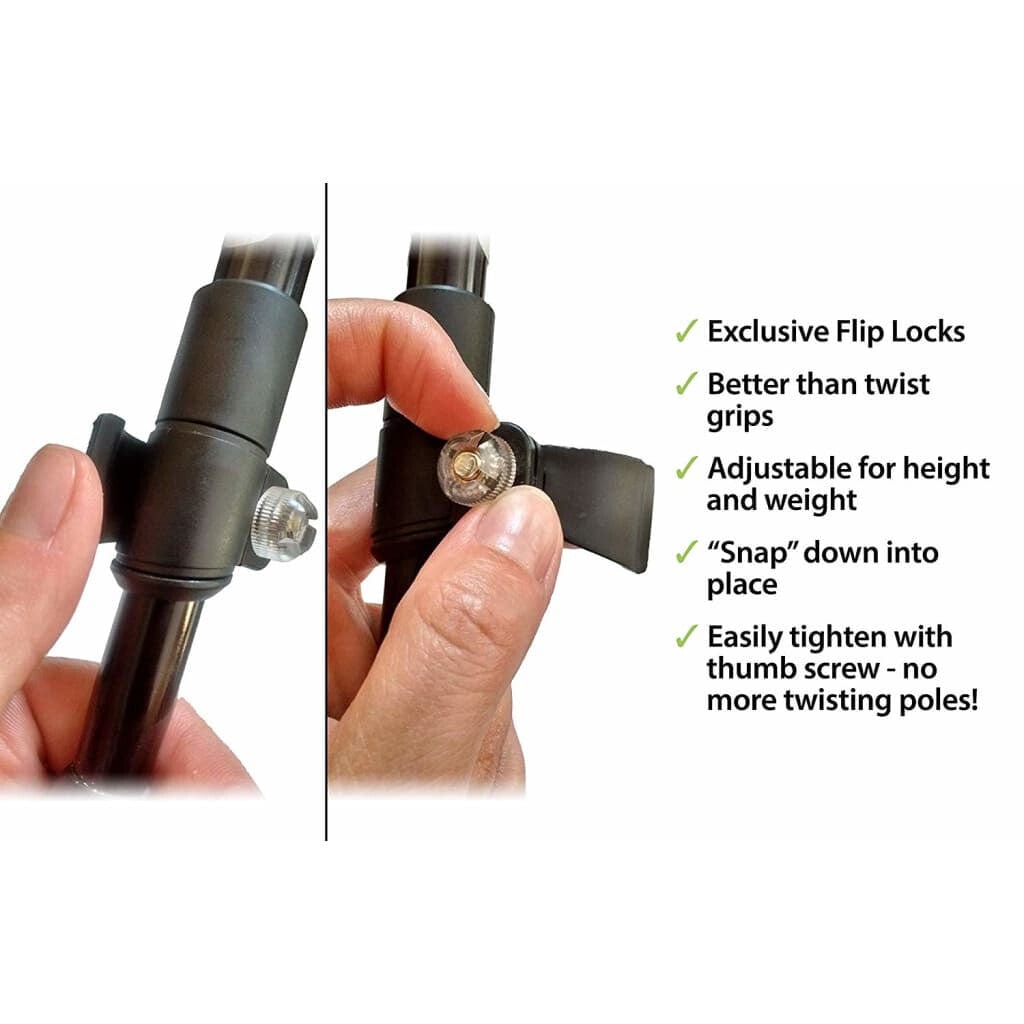
Before heading out, make sure all adjustment mechanisms are securely locked. If you're unsure about the correct height or technique, a physical therapist or qualified walking instructor can help you get started.
4. Consider Weight and Ease of Use
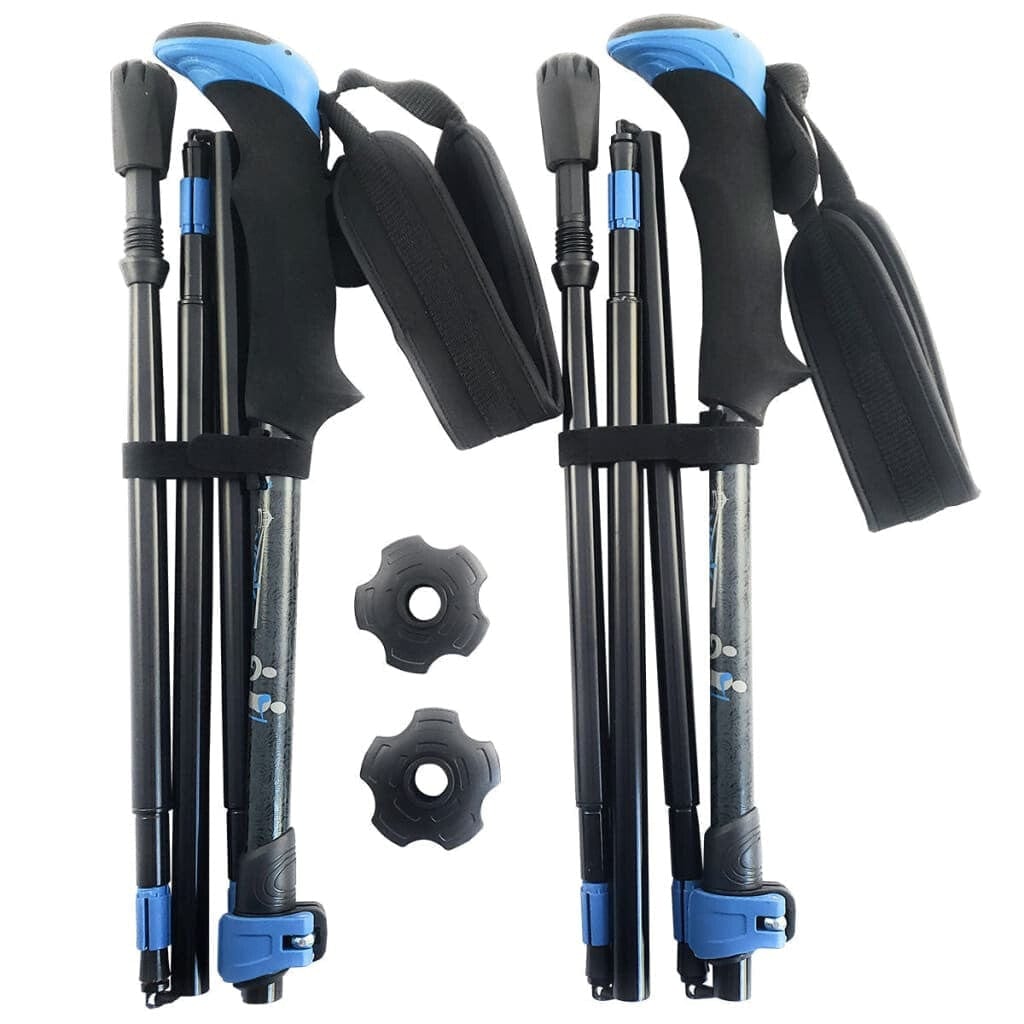
For seniors, lightweight walking poles can be easier to lift and move repeatedly during a walk. They may also be more convenient to pack for travel or store when not in use. However, weight isn't the only factor. Consider how easy the poles are to adjust, collapse, carry, and handle.
Look for features such as:
-
Adjustable height: Helps you find a comfortable fit.
-
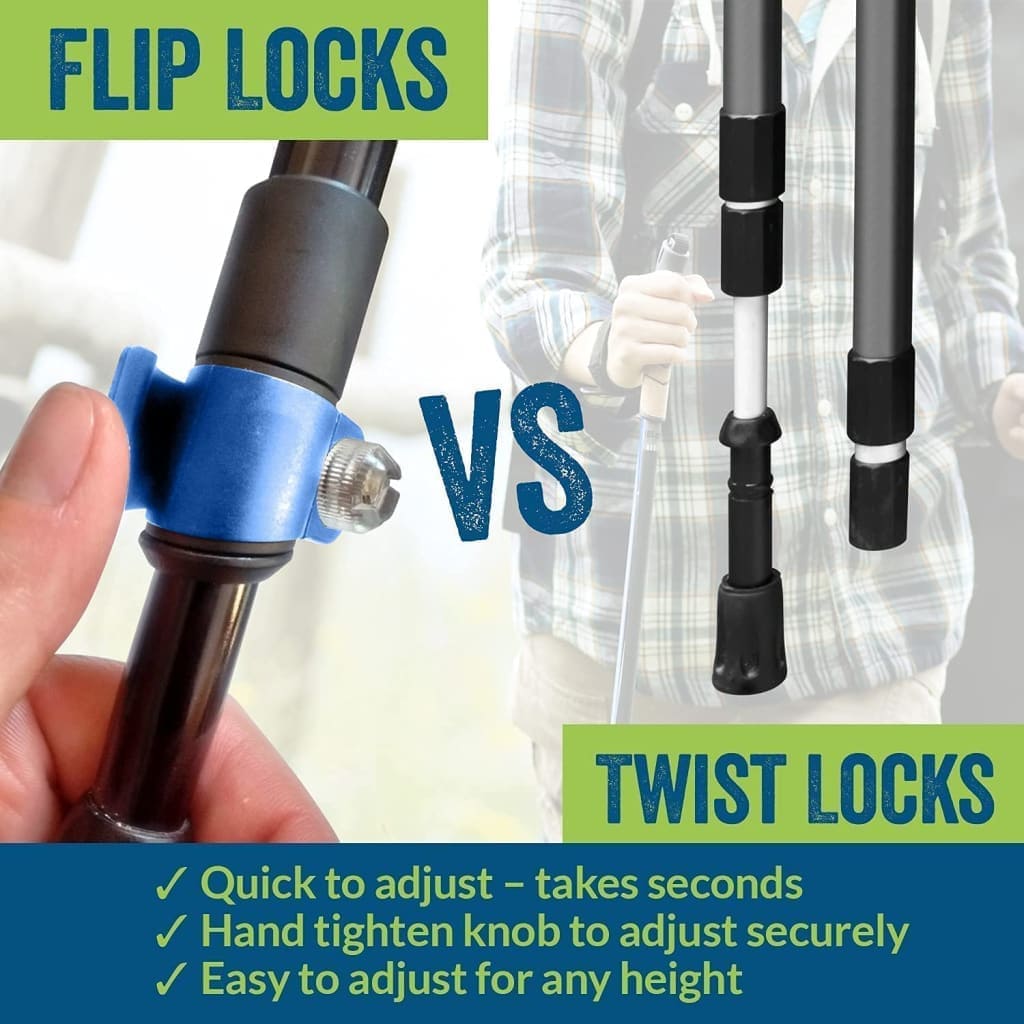
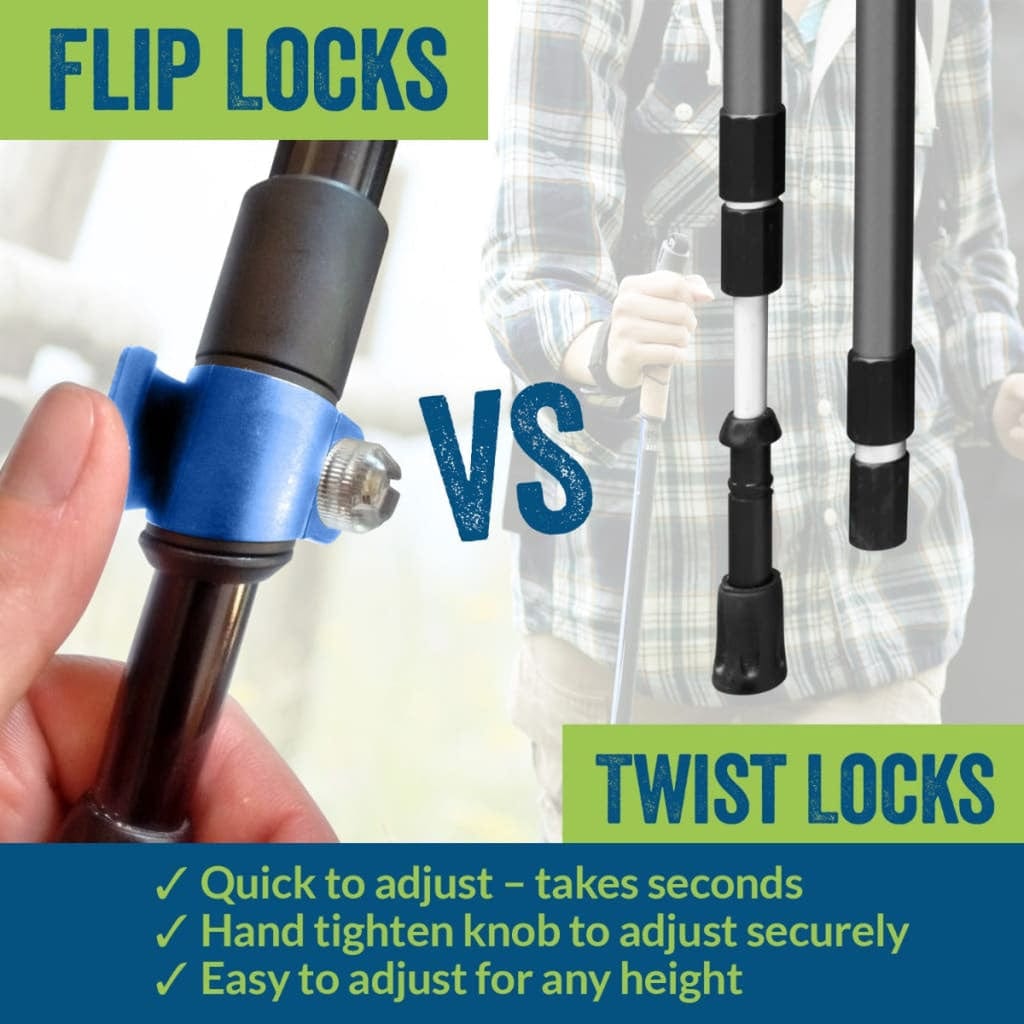
Secure locking mechanisms: Keep the poles at your selected length when properly adjusted.
-
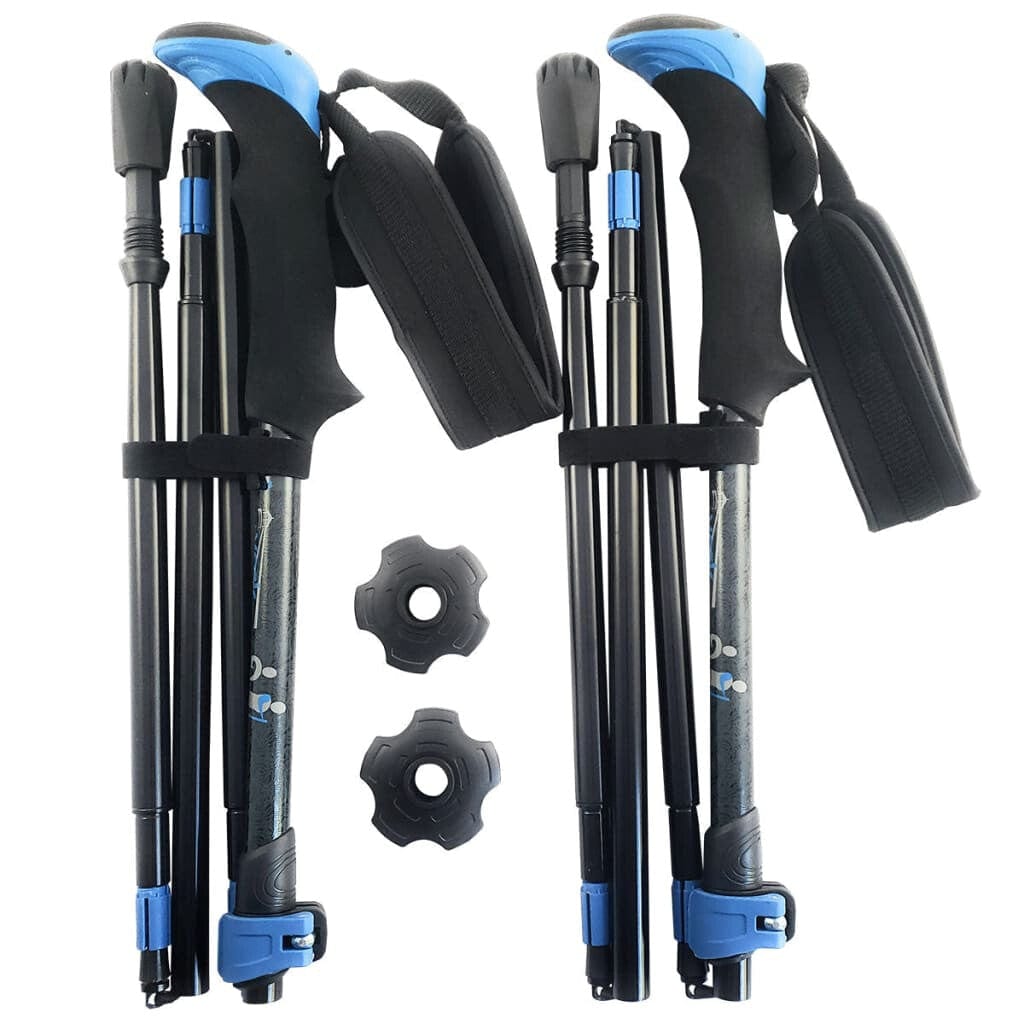
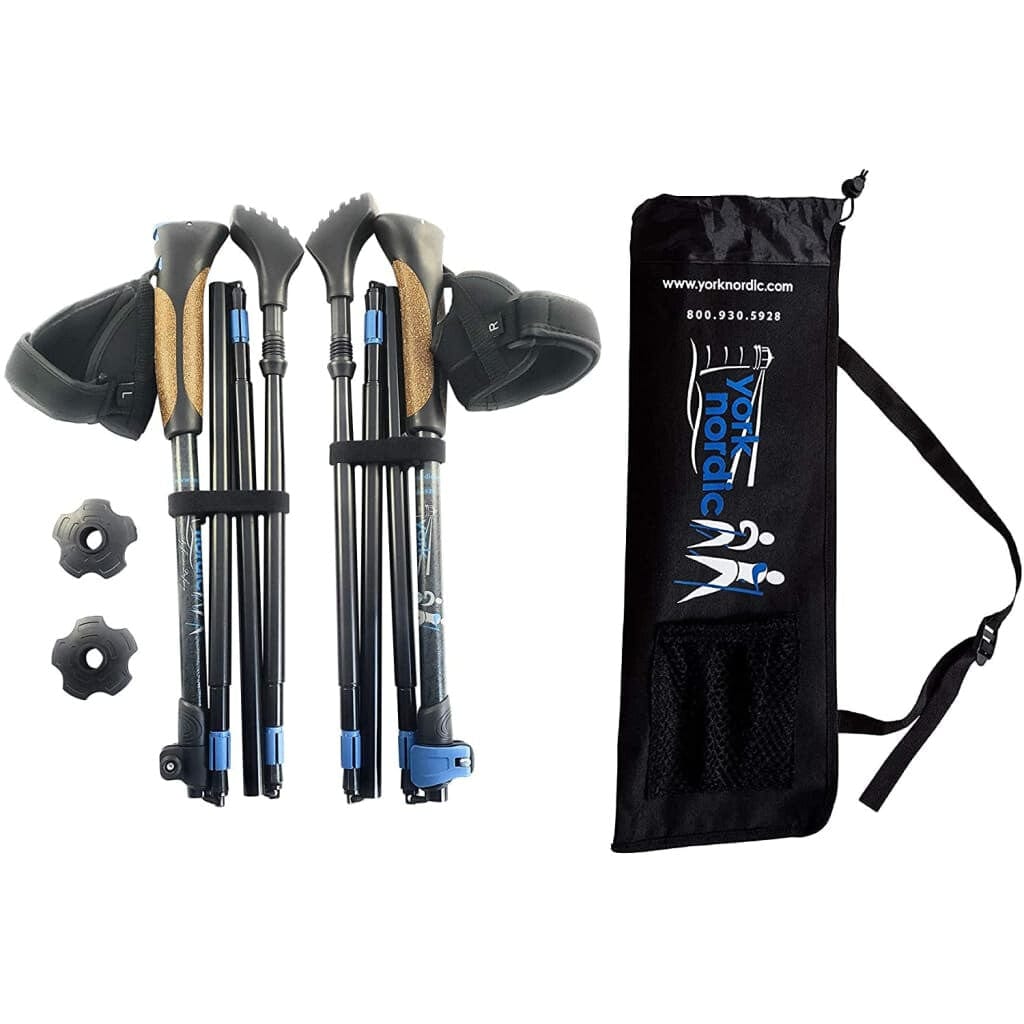
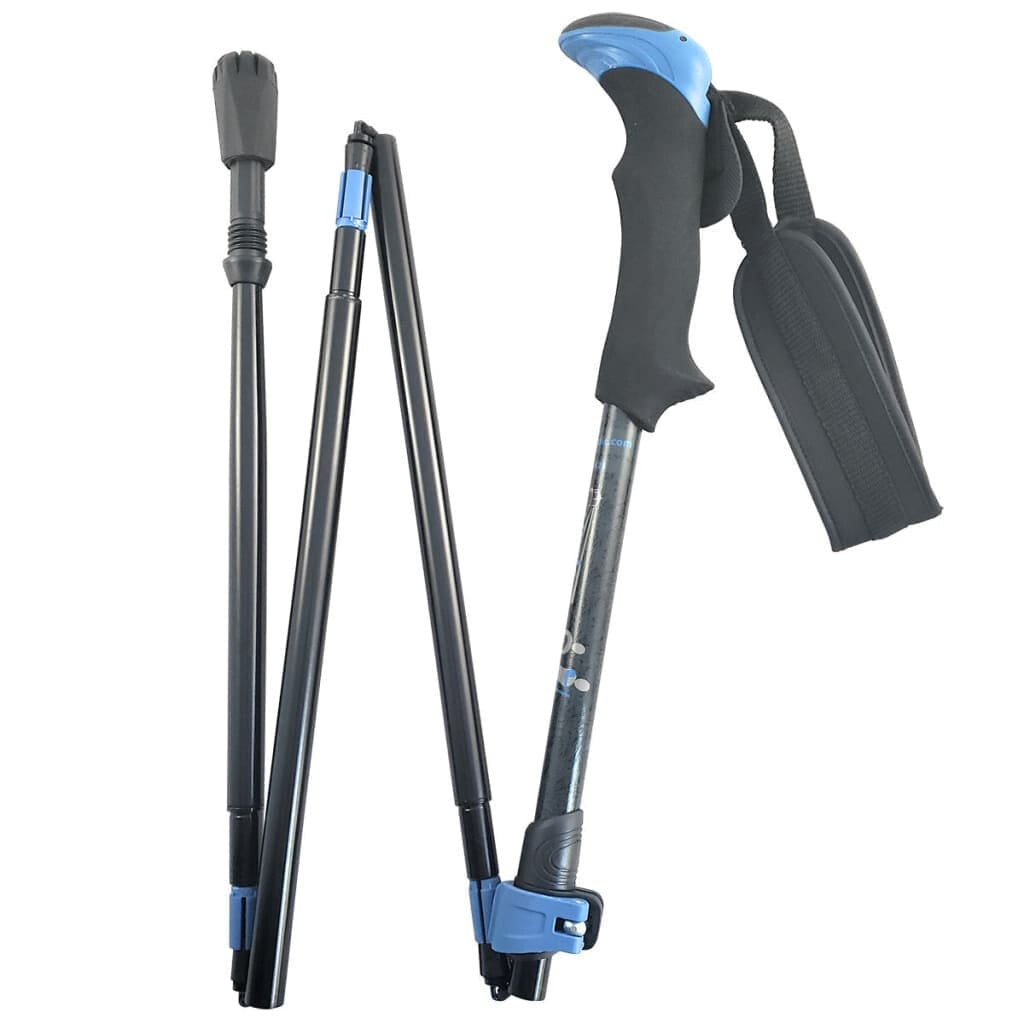
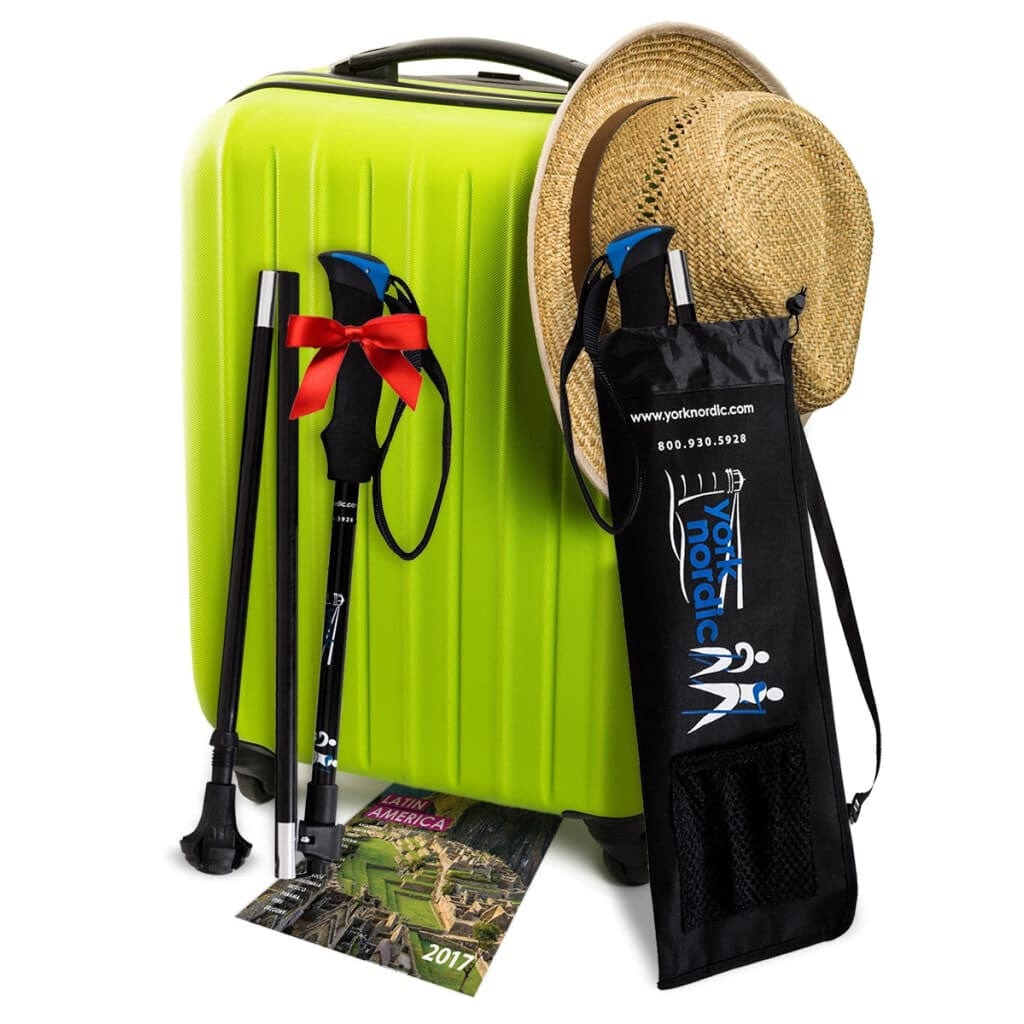
Collapsible design: Makes storage and travel easier.
-
Comfortable grips: Help reduce the need to grip tightly.
-
Durable construction: Supports regular use on your preferred walking surfaces.
Choose poles you can manage confidently. If adjusting small locks or handling multiple components is difficult, prioritize a simple design that's easy for you to operate.
5. Pay Attention to the Tips
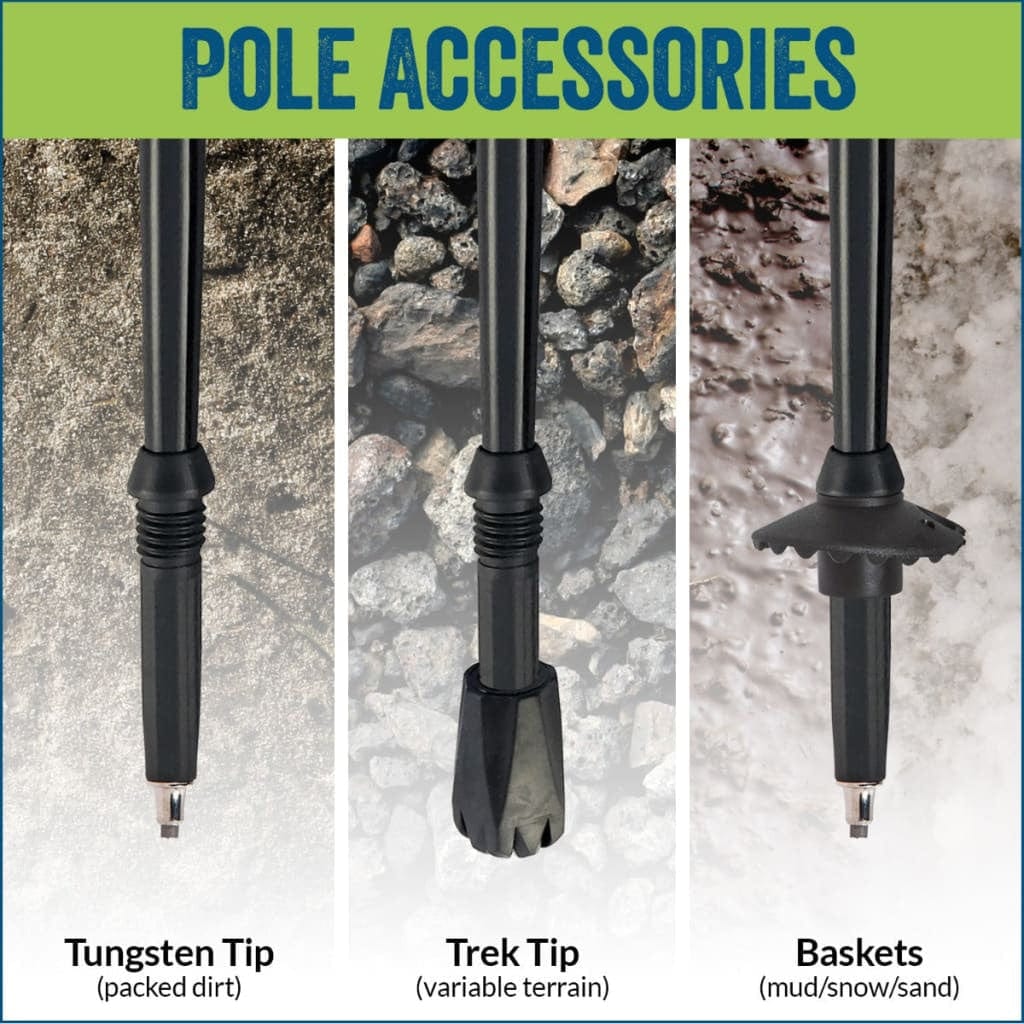
The tips on your walking poles are more important than you might think. They help determine how the poles interact with the ground.
Different tips are designed for different surfaces, so consider where you walk most often.
-
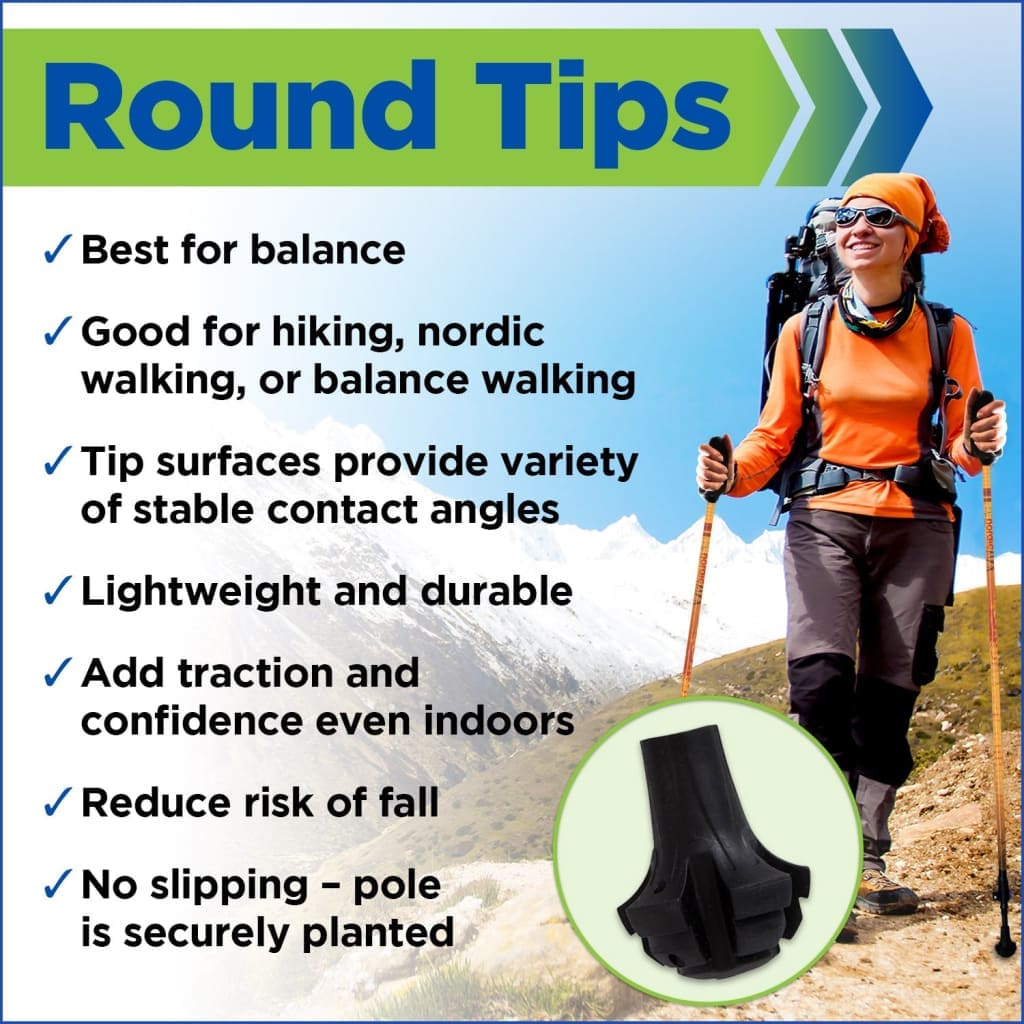
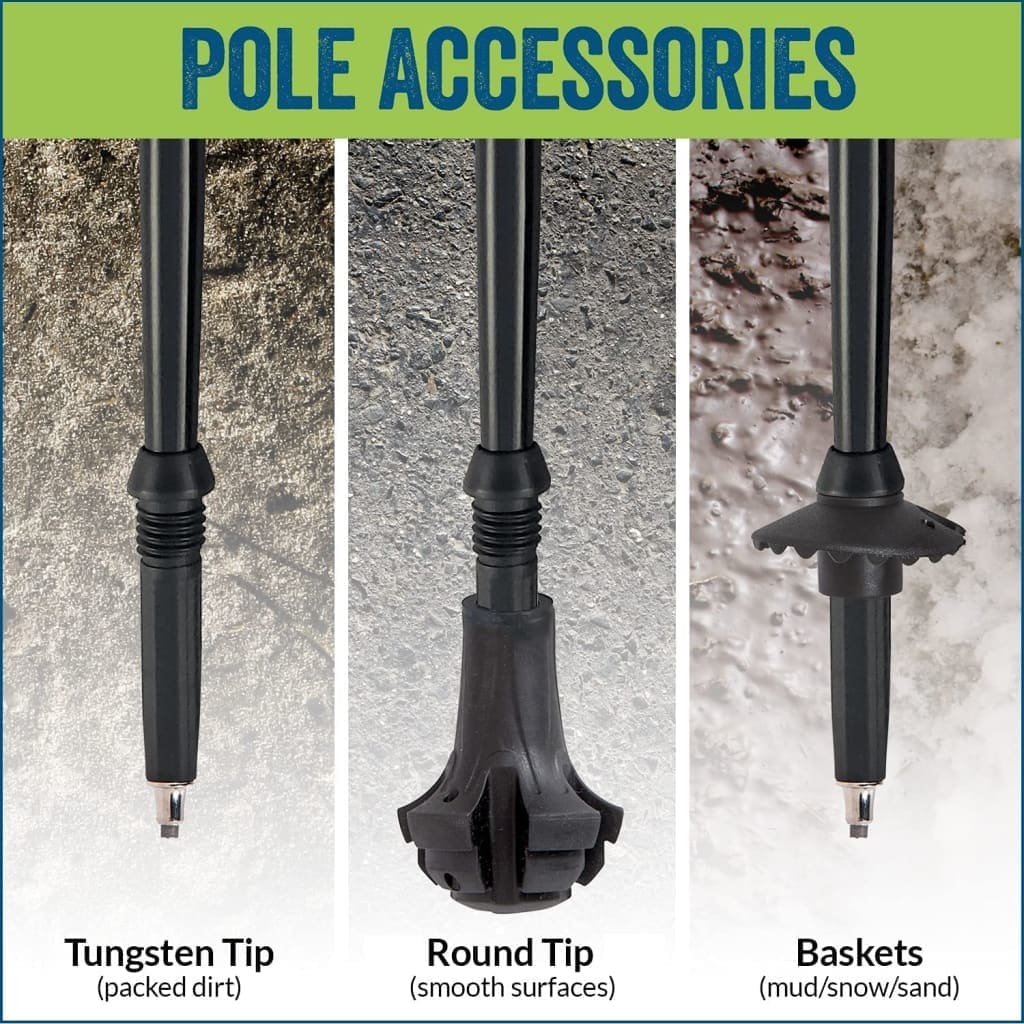
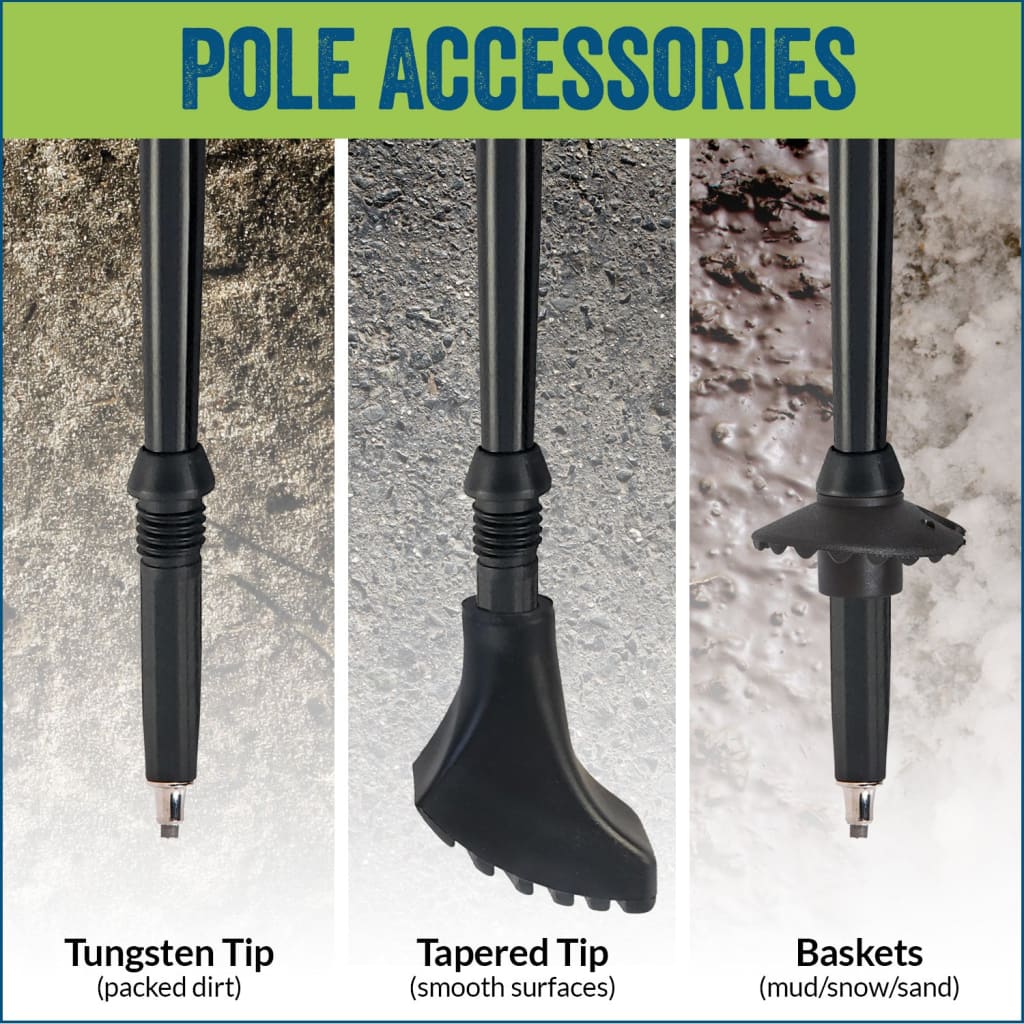
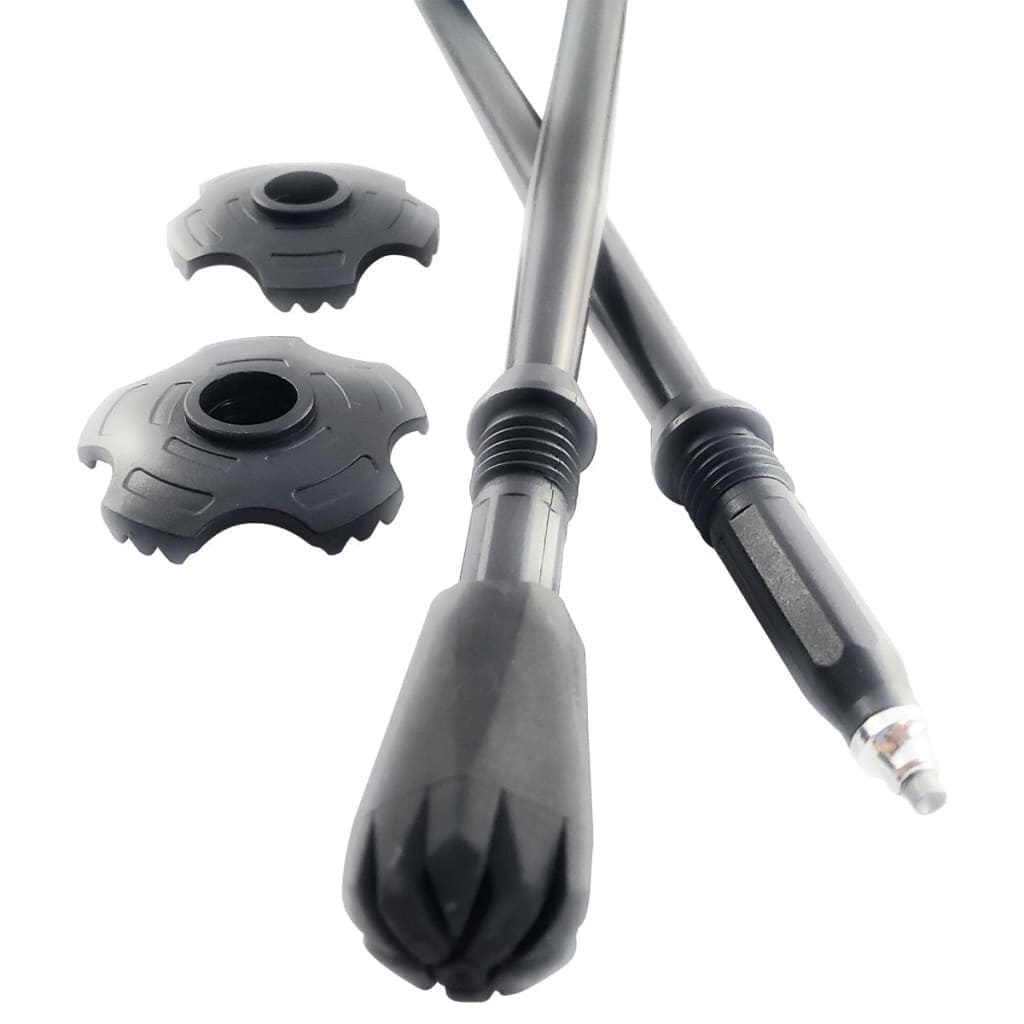
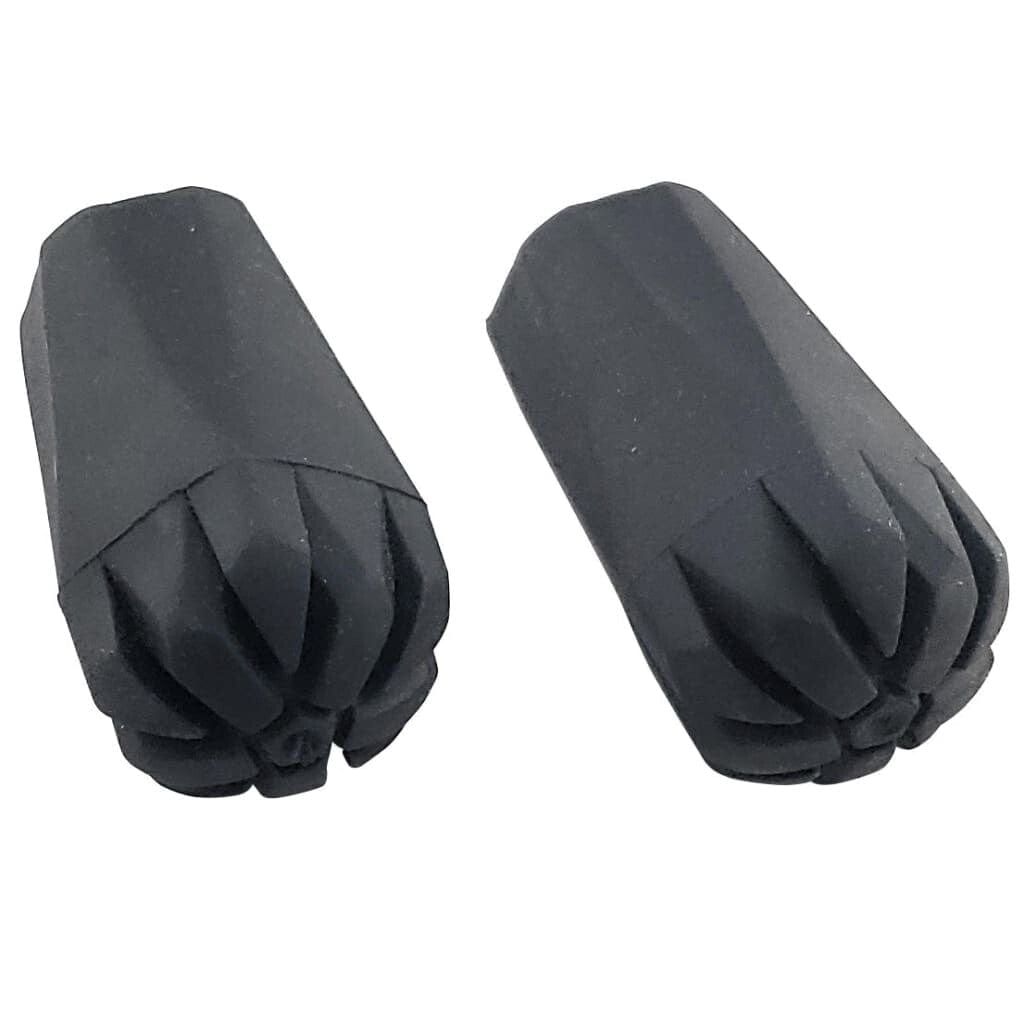
Sidewalks and pavement: Rubber tips can provide a useful contact surface on hard ground.
-
Dirt paths and trails: Standard walking pole tips may be suitable, depending on the terrain.
-
Mixed surfaces: Interchangeable tips can make it easier to adapt your poles to different conditions.
Check your tips regularly for wear and make sure they fit securely. Worn or damaged tips should be replaced, since tip condition can affect traction and pole performance.
For more guidance, see York Nordic's How to Determine Rubber Tips resource.
6. Practice Before You Head Out
Even the best walking poles take a little getting used to.
Start somewhere familiar and relatively flat. Check that the poles are adjusted correctly, the locks are secure, and the tips are in good condition.
Begin with short walks and focus on a relaxed grip, comfortable arm movement, and an upright posture. Increase your distance gradually as you become more comfortable. If you feel unsteady, experience pain, or struggle to coordinate the poles with your steps, pause and reassess. A physical therapist or qualified instructor can help you learn a technique suited to your abilities.
Remember: walking poles are intended to support your walking experience, not to replace appropriate medical care or a mobility aid you have been advised to use.
7. Choose Poles That Fit Your Needs—Not Just Your Age
There is no single pair of walking poles that's best for every senior. Someone looking for a lightweight fitness tool may have very different needs from someone who wants extra confidence on neighborhood walks or enjoys exploring hiking trails.
Before buying, ask yourself:
-
Where will I use my walking poles most often?
-
Do I need adjustable or collapsible poles?
-
Are the grips comfortable for my hands?
-
Can I adjust and secure the poles independently?
-
Do I need different tips for the surfaces I walk on?
-
Would guidance from a physical therapist help me choose or use them safely?
Your answers can help narrow the options and make choosing easier.
Keep Moving With Confidence
The best walking poles for seniors are the ones that match your comfort, activities, and support needs. With the right fit and proper technique, walking poles may help support balance, encourage better posture, and make it easier to enjoy regular walks.
Whether you're getting back into exercise, exploring new places, or simply hoping to feel more comfortable on your daily walks, the right poles can be a useful addition to your routine.
Ready to find your fit? Explore York Nordic's range of walking poles and use our Help Me Choose guide to narrow down the options based on your needs. Let's Get Out There!
Tags
Educational, Health Benefits of Walking, Pole Walking for Seniors, Product Updates


Latest Designs